Usha Janome Dream Stitch Review: Easy for Beginners, Useful for Home Sewing, but Accessories and Heavy-Duty Expectations Need Care
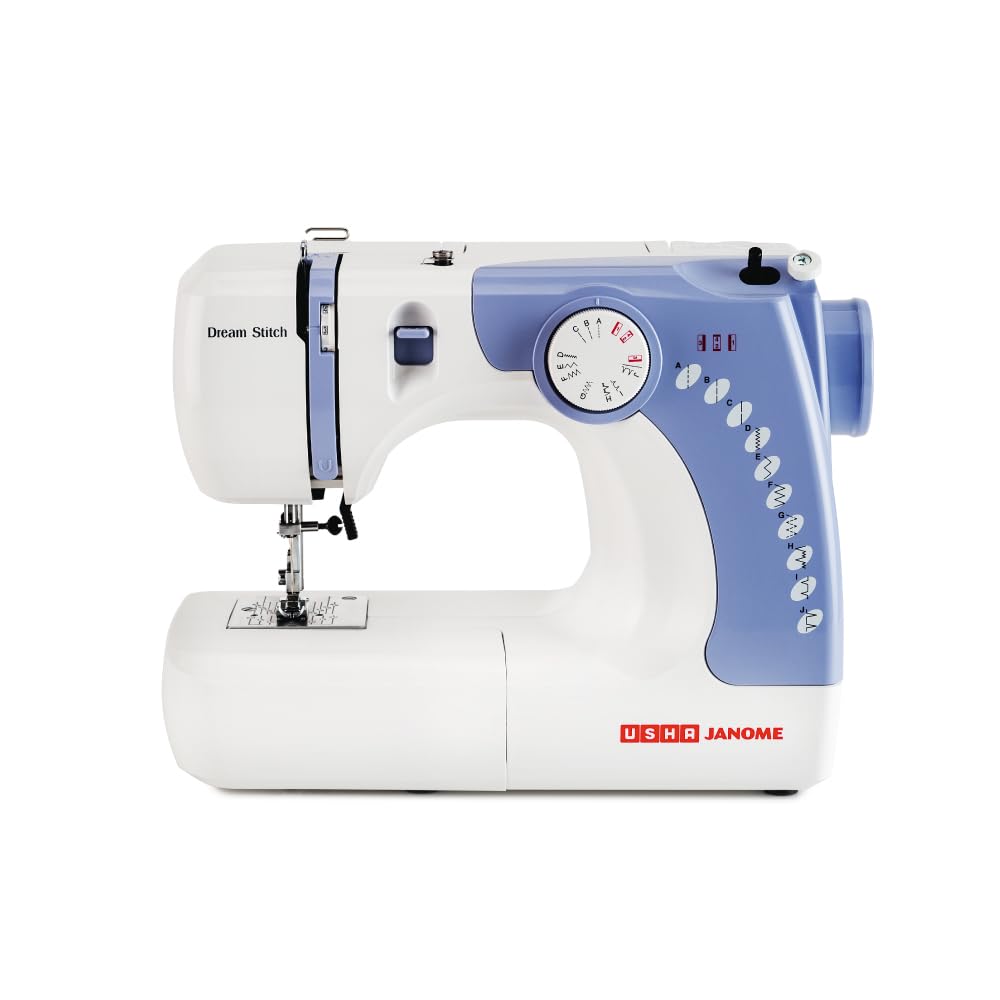
The Usha Janome Dream Stitch Automatic Zig-Zag Electric Sewing Machine is one of the more approachable home sewing machines for buyers who want something more capable than a basic straight-stitch model without moving into an expensive computerized machine.
Its feature set is practical rather than excessive: 7 built-in stitches, 14 stitch functions, a 4-step buttonhole, manual tension control, free-arm sewing, drop feed, an auto-tripping bobbin system, sewing light and stitch-length control. It is also compact and portable, which makes it easier to store in a cupboard or move around the house.
Customer feedback is broadly positive. The Amazon data shows a 4.2 out of 5 rating from more than 8,500 global ratings, with 59% five-star and 24% four-star ratings.
The strongest themes are easy to spot: beginners generally find it manageable, home users like its portability and stitch variety, and it is often seen as good value for routine sewing. The main cautions are missing accessories in some deliveries, mixed stitching experiences, occasional setup frustrations, and the fact that it should not be treated like a heavy-duty tailoring machine.
Check the Latest Usha Janome Dream Stitch Price on Amazon
Why the Dream Stitch Makes Sense for Home Sewing
The Dream Stitch is built around the kind of work most home users actually do.
It is suitable for:
- basic alterations
- garment repairs
- hemming
- straight stitching
- zig-zag stitching
- lace fixing
- quilting
- smocking
- rolled hemming
- simple decorative work
- buttonholes
That makes it noticeably more versatile than a traditional straight-stitch machine, but it still remains simple enough to understand without spending hours learning menus or electronic controls.
The stitch selector uses a dial, so the user can choose a pattern mechanically rather than navigating a digital interface.
For many beginners, that is an advantage.
It Is Particularly Beginner-Friendly
A large number of customer comments describe the Dream Stitch as easy to use.
Several buyers specifically call it suitable for beginners, and that matches the machine’s design.
The control layout is relatively simple. Once the user understands:
- threading
- bobbin loading
- stitch selection
- tension
- reverse stitching
- foot-pedal control
there is not much complexity standing between setup and actual sewing.
One long-term owner described learning the machine mostly through the manual and YouTube videos after a disappointing technician visit. That is useful context because it shows that the machine itself can be understandable even when formal demonstration support is not ideal.
Another recent owner using an electric machine for the first time described the manual as helpful and said the machine was easy to get used to.
The Dream Stitch is therefore a good option for someone who genuinely wants to learn sewing, rather than someone expecting a machine that requires no learning at all.
The Stitch Selection Covers Most Basic Creative Work
The product listing specifies 7 built-in stitches and 14 stitch functions.
That may sound modest compared with machines offering dozens of stitch patterns, but for home sewing it is enough to cover a useful range of work.
The machine supports both straight and zig-zag variations along with applications such as:
- lace fixing
- quilting
- smocking
- rolled hemming
There is also a 4-step buttonhole function.
The practical advantage is that the machine offers more creativity than a basic straight-stitch model without introducing unnecessary complexity.
For someone who mostly repairs clothes but occasionally wants to do decorative work, that balance makes sense.
The Dial-Type Stitch Selector Keeps Operation Simple
The Dream Stitch uses a mechanical stitch selector.
The pattern is shown around the dial, and the user turns the selector to choose the desired stitch.
This is a small feature, but it contributes heavily to the machine’s beginner-friendly feel.
Instead of programming a machine, the user physically selects a stitch.
That makes switching between common functions quick and intuitive.
Several owners specifically mention that the stitch selector is straightforward.
The Free Arm Is Very Useful for Garment Work
The machine includes a compact free-arm design.
This becomes useful when sewing narrow or tubular parts of clothing, such as:
- sleeves
- cuffs
- trouser legs
- children’s clothing
- small openings
The extension section can be removed to expose the narrower free arm.
For anyone doing garment alterations, this is far more useful than it may appear from the specification sheet.
It is one of the reasons the Dream Stitch works better as a home garment machine than a very basic flat-bed model.
Portability Is One of Its Strongest Everyday Advantages
The Dream Stitch is frequently praised for being compact and easy to move.
The machine includes a carrying handle and has a relatively manageable size.
That makes it suitable for homes where the sewing machine cannot remain permanently set up on a dedicated table.
You can use it, move it and store it more easily than a traditional heavy iron machine.
Several customers specifically mention:
- lightweight design
- easy carrying
- compact dimensions
- convenient storage
This makes the machine especially attractive for apartment living or occasional home use.
The Foot Pedal Is Responsive
Customer feedback often describes the foot pedal as sensitive and responsive.
That is useful because speed control matters when learning to sew.
A beginner can start more slowly when:
- sewing curves
- approaching corners
- positioning fabric
- working around small details
- finishing seams
The product listing gives a sewing speed of around 550 stitches per minute, which puts it comfortably in the domestic sewing category.
That is enough for normal home use without pushing the machine into high-speed industrial territory.
The Built-In Sewing Light Is Helpful, but There Is One Caveat
The machine includes a sewing light to illuminate the needle area.
That helps when working:
- at night
- on dark fabric
- with detailed seams
- in rooms with weak overhead lighting
One owner reported that the light area became warm during long sessions.
That appears to be limited feedback rather than a widespread problem, but it is worth keeping in mind if you plan to use the machine continuously for extended periods.
For ordinary home sewing, the light remains a useful feature.
The Bobbin System Is Designed to Be Beginner-Friendly
The machine uses an auto-tripping bobbin system.
Once the user understands how to wind and load the bobbin, the setup is relatively straightforward.
The machine also has an accessory compartment near the bobbin area.
Several owners describe being able to start sewing quickly after learning the bobbin and threading process.
There are, however, some complaints involving:
- bobbin thread tangling
- missing bobbin cases
- missing related parts
These appear more connected to individual deliveries or setup issues than to a universal design problem.
Still, the bobbin area is one of the first things you should test after delivery.
Manual Needle Threading Means There Is Still Some Traditional Setup
One important clarification: the current product listing specifies manual needle threading.
That means you should not buy the Dream Stitch expecting an automatic needle threader.
Some customer comments appear to describe easy threading or even automatic threading, but the official listing for this exact model states manual threading.
For experienced users, this is unlikely to matter.
For beginners or users with poor eyesight, it may be more important.
Threading is not difficult once learned, but it is still a manual step.
Stitching Performance Is Mostly Positive, but Not Completely Consistent
Many users describe the Dream Stitch as smooth and reliable for normal sewing.
The machine is often praised for:
- neat stitching
- smooth operation
- good household performance
- flexible stitch selection
- stable results on ordinary fabrics
However, Amazon’s review summary also shows that stitching performance receives mixed feedback.
Some users report:
- thread breakage
- bobbin tangling
- difficulty getting correct stitching
- setup-related problems
This is worth interpreting carefully.
A sewing machine can produce poor stitches because of:
- incorrect threading
- wrong tension
- an unsuitable needle
- low-quality thread
- incorrect stitch selection
- fabric handling
- actual machine faults
So not every stitching complaint automatically points to defective hardware.
The Dream Stitch seems to work well for many owners once correctly set up, but complete beginners should expect to spend some time learning proper threading and tension.
It Handles a Useful Range of Fabrics, but Heavy Work Is Not Its Strength
Some customers report successfully sewing material ranging from lightweight fabric to denim.
Others say the Dream Stitch is better suited to light and medium sewing and is not ideal for continuous heavy-duty work.
Those two experiences are not necessarily contradictory.
A domestic machine may be capable of sewing occasional thicker material without being appropriate for regular heavy stitching.
That distinction matters.
The Dream Stitch should be well suited to:
- cotton
- normal dress material
- household fabrics
- light craft material
- basic denim work
- routine alterations
It is less suitable for:
- constant thick denim
- many dense layers
- heavy canvas
- upholstery
- industrial tailoring
- continuous commercial sewing
One experienced buyer specifically suggested that people doing constant heavy work should consider the heavier iron machines commonly used by professional tailors.
That is sensible advice.
Home Boutique Use Is Possible — Within Limits
Some owners describe using the machine for basic boutique-style work.
That seems reasonable.
The Dream Stitch has enough stitch variety and garment functionality for:
- alterations
- small clothing projects
- decorative finishing
- small-volume tailoring
But it should not be viewed as a full replacement for a professional industrial sewing machine.
If a home boutique mainly handles lighter garments and moderate workloads, the Dream Stitch may be sufficient.
If the machine will run for hours every day on dense material, a heavier machine makes more sense.
Drop Feed Adds Creative Possibilities
The listing specifies drop feed for embroidery.
Dropping the feed mechanism allows the user more manual control over how fabric moves.
That can be useful for certain decorative techniques and free-motion style work.
It is not the same as owning a computerized embroidery machine, but it expands the creative potential of the Dream Stitch beyond simple straight seams.
For hobby sewing, this is a useful bonus.
Maintenance Is Relatively Straightforward
The Dream Stitch is a mechanical electric machine rather than a complex computerized one.
That generally makes basic cleaning and maintenance easier to understand.
Users have access to the bobbin area and removable components, and the manual provides guidance for routine operation.
Basic good practice includes:
- removing lint regularly
- keeping the bobbin area clean
- using appropriate needles
- changing damaged needles
- using suitable thread
- following lubrication instructions
- storing the machine under its cover
A simple maintenance routine can make a meaningful difference to stitch consistency and longevity.
Missing Accessories Are the Most Repeated Delivery Complaint
This is one of the clearest patterns in recent customer feedback.
Several buyers report that expected free accessories were missing.
Specific complaints mention:
- missing bobbin cases
- missing screws
- multiple missing free accessories
- incomplete accessory sets
This does not appear to affect every order, but it happens often enough that buyers should take it seriously.
The current listing says the free machine accessories are placed in the accessory compartment.
When the machine arrives, open that compartment and check everything against the current product description.
Do this immediately.
Do not assume an accessory is simply hidden somewhere in the box.
Check the Current Package Contents and Latest Price on Amazon
Packaging and Delivery Condition Should Also Be Checked
There are isolated complaints involving heavily damaged packaging.
One recent buyer said the box arrived badly damaged and returned the machine without using it.
That appears to be a delivery-condition issue rather than evidence of a general machine defect.
Still, a sewing machine contains mechanisms that can be affected by rough handling.
On delivery, inspect:
- the outer box,
- machine body,
- hand wheel,
- needle area,
- foot pedal,
- bobbin mechanism,
- power cable,
- accessory compartment.
If the machine shows obvious signs of impact or damage, it is better to address that promptly rather than forcing the machine to operate.
Service and Demonstration Experiences Are Mixed
The product listing promotes access to learning resources and support, including a way to connect for queries or a demo.
Customer experiences are less consistent.
Some owners describe poor demonstrations or delays in getting a technician.
One detailed buyer said the technician visit was not helpful and ultimately learned more from YouTube.
Others have had better ownership experiences without needing much service at all.
The takeaway is simple:
Do not make your purchase depend entirely on receiving an excellent home demonstration.
The Dream Stitch is simple enough that many people can learn it from the manual and instructional videos.
Still, buyers who strongly depend on in-person support should check local Usha service availability first.
The Two-Year Warranty Is Reassuring
The listing specifies a 2-year manufacturer’s warranty and states that the Amazon invoice is sufficient for claiming it.
That is useful because it reduces uncertainty about whether the online invoice counts as proof of purchase.
Keep the invoice and warranty documentation stored safely.
The machine package is also listed as including:
- sewing machine
- instruction manual
- warranty card
If the warranty card is missing, it is worth checking the current claim process promptly.
The Rating Distribution Is Strong
The Amazon snapshot shows:
- 59% five-star
- 24% four-star
- 7% three-star
- 2% two-star
- 8% one-star
That means 83% of ratings are four or five stars.
For a product with thousands of ratings, that is a strong overall pattern.
The positive feedback is mainly tied to:
- ease of use
- beginner suitability
- value for money
- home sewing
- portability
- simple controls
Negative feedback is more concentrated around:
- missing accessories
- delivery damage
- thread or bobbin problems
- inconsistent stitching experiences
- service quality
That makes the Dream Stitch easier to evaluate than a machine where complaints point to a single widespread hardware failure.
Is the Dream Stitch Good for Beginners?
Yes.
This is probably one of its strongest use cases.
The dial controls, simple stitch selection, compact design and straightforward mechanical operation make it relatively approachable.
A beginner still needs to learn:
- threading
- bobbin winding
- bobbin insertion
- tension
- needle selection
- basic fabric handling
But once those fundamentals are understood, the machine should be manageable.
Is It Good for Experienced Home Users?
Yes, provided they do not need advanced computerized functionality.
The Dream Stitch offers enough flexibility for:
- clothing projects
- alterations
- decorative work
- quilting-related tasks
- basic boutique sewing
More experienced users may appreciate the simplicity because there are fewer electronic systems to deal with.
Who Should Consider the Usha Janome Dream Stitch?
It is a strong fit for:
- beginners
- home sewing users
- people doing clothing alterations
- hobbyists
- users who want zig-zag functionality
- people who need a compact portable machine
- anyone doing moderate creative sewing
- light boutique use
- people who want a branded machine without moving into computerized pricing
Who Should Probably Choose Something Else?
A different machine may make more sense if you need:
- industrial-speed sewing
- constant heavy denim work
- thick upholstery
- high-volume tailoring
- computerized embroidery
- automatic needle threading
- dozens of decorative stitches
- highly automated controls
The Dream Stitch is designed primarily around practical home sewing.
Is the Usha Janome Dream Stitch Worth Around ₹11,999?
The captured listing showed a price of approximately ₹11,999, against an MRP of ₹12,650.
At that level, the value proposition is fairly clear.
You are paying for:
- a reputable sewing-machine brand
- automatic zig-zag capability
- multiple stitch functions
- free-arm sewing
- drop feed
- stitch-length control
- bobbin winding
- portable construction
- a two-year warranty
For a beginner or regular home user, that combination makes sense.
Someone who only needs straight stitching can spend considerably less.
Someone who needs heavy-duty power should spend differently rather than simply more.
See Customer Reviews and Check the Latest Price on Amazon
Final Assessment
The Usha Janome Dream Stitch is a well-rounded home sewing machine that succeeds mainly because it balances simplicity with enough versatility to keep users from outgrowing it too quickly.
It is compact, portable and easy enough for beginners, while its straight and zig-zag options, free arm, buttonhole function, drop feed and other applications make it considerably more useful than a basic sewing machine.
Its strongest fit is ordinary home sewing:
- alterations
- repairs
- garment projects
- decorative stitching
- light creative work
The biggest caution is not the basic design of the machine.
It is the ownership details around it.
Recent reviews repeatedly mention missing accessories, and a smaller number mention thread problems, bobbin issues, damaged deliveries or disappointing service.
That makes the initial inspection important.
When the machine arrives, verify the accessories, test the bobbin system, try several stitches and make sure everything functions properly while the relevant return or replacement window is still active.
For a buyer looking for an approachable electric sewing machine with more flexibility than a basic straight-stitch model, the Dream Stitch remains a strong option.
For continuous heavy tailoring or industrial-style work, it is better to choose a machine designed specifically for that workload.
View the Usha Janome Dream Stitch on Amazon and Check Current Availability