SINGER C5205 Computerized Sewing Machine Review: Feature-Rich and Creative, but the Buyer Feedback Deserves Attention
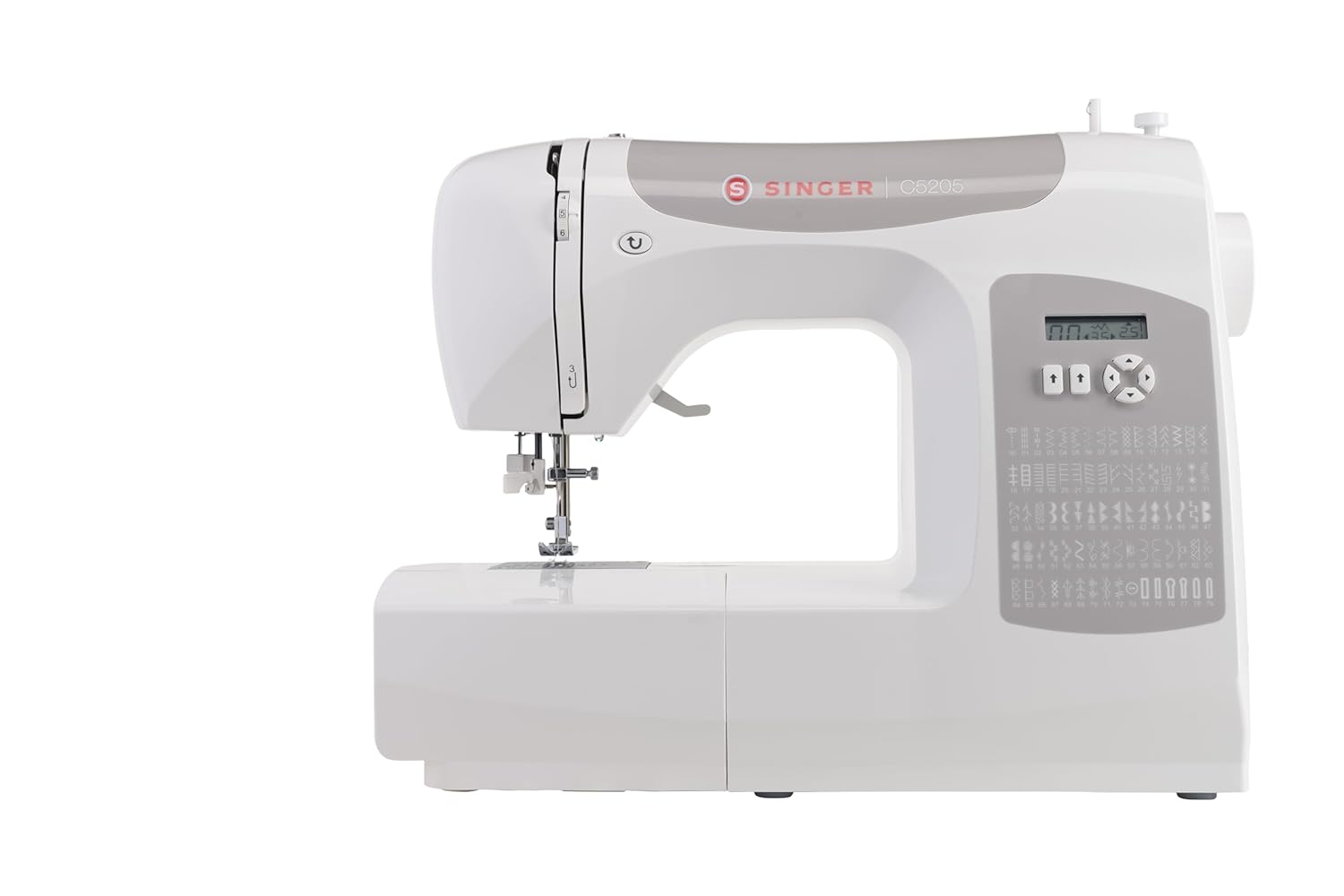
The SINGER C5205 Computerized Sewing Machine is positioned well above Singer’s basic mechanical models. Instead of offering only a handful of utility stitches, it brings together 80 built-in stitches, an LCD display, automatic needle threading, six one-step buttonhole styles, adjustable stitch dimensions, an extension table, eight presser feet, and a claimed sewing speed of up to 800 stitches per minute.
That makes the C5205 attractive for someone who has moved beyond occasional repairs and wants a machine for garment making, decorative work, quilting, alterations, and more creative home sewing.
The specification sheet is impressive for its roughly ₹21,999 selling price shown in the supplied Amazon listing. However, the customer evidence is not as reassuring as the feature list. The listing carries a 3.8/5 rating from 11 global ratings, with 20% of those ratings at one star.
The limited written feedback includes one satisfied owner but also complaints about quality, disappointing speed, and operation at low voltage. That means the C5205 is a machine where the features are compelling, but the purchase deserves more scrutiny than the Singer name and 80-stitch headline might suggest.
Check the latest SINGER C5205 price on Amazon
80 Built-In Stitches Give the C5205 Far More Creative Range Than a Basic Machine
The strongest reason to consider the C5205 is its stitch selection.
Singer lists 80 built-in stitch patterns, covering utility, decorative, stretch, and embroidery-style options.
For everyday ownership, that means the machine can potentially handle much more than straight seams and basic zig-zag.
It can be useful for:
- ordinary garment construction,
- decorative edging,
- stretch fabrics,
- alterations,
- home décor projects,
- creative stitching,
- quilting-related work,
- buttonholes,
- zipper installation,
- blind hemming,
- overcasting.
Someone moving from an old straight-stitch machine may find this amount of flexibility transformative.
At the same time, 80 stitches matter most if they will actually be used.
A user who mainly repairs clothes or makes simple straight-seam garments does not necessarily need a computerized machine with this many options. The C5205 makes more sense for someone who wants to explore different stitch styles over time.
The LCD Display Changes the Sewing Experience
The C5205 uses an LCD display for stitch selection and settings.
That separates it from traditional machines that rely entirely on mechanical dials.
For users comfortable with digital controls, the LCD interface can make a large stitch library easier to manage.
Instead of trying to remember which dial combination corresponds to which decorative pattern, the user gets a clearer way to select and configure stitches.
For beginners, this can eventually make a complicated machine easier to use.
There is still a learning curve.
A computerized machine has more settings and possibilities than a basic mechanical model, so new users should expect to spend some time learning how stitch selection, length, width, needle position, and presser feet interact.
Six One-Step Buttonholes Are a Major Garment-Making Advantage
Singer gives the C5205 six one-step buttonhole styles, including an eyelet-style option.
That is considerably more flexible than machines that provide a single four-step buttonhole.
For anyone making:
- shirts,
- blouses,
- dresses,
- children’s clothing,
- jackets,
- cushion covers,
- fashion projects,
this can be one of the most useful features on the machine.
A one-step buttonhole simplifies the operation and can make repeated buttonholes easier to reproduce.
The availability of multiple styles also means the user can choose a buttonhole that better matches different garments rather than using exactly the same pattern everywhere.
The 70W Motor and 800 SPM Claim Sound Strong—but Customer Experience Is Mixed
Singer specifies a 70-watt motor with speeds up to 800 stitches per minute.
On paper, that is appropriate for a serious domestic sewing machine.
But this is exactly where the owner feedback becomes important.
One dissatisfied user specifically complained that the stitching speed felt very low and also reported that the machine did not work properly at low voltage.
That is only one detailed report, so it would be unfair to conclude that every C5205 runs slowly.
However, it reveals an important distinction between an advertised maximum speed and actual user perception.
An “up to 800 SPM” specification does not guarantee that every owner will experience the machine as particularly fast in every situation.
For users in areas with unstable voltage, the low-voltage complaint is especially worth considering.
Low-Voltage Operation Could Matter More Than It Seems
Mechanical sewing machines are relatively straightforward when power conditions fluctuate.
A computerized machine contains electronic controls, which can make stable power more important.
The customer complaint about low-voltage operation is therefore worth treating seriously even though it is limited evidence.
Buyers who experience frequent voltage fluctuations may want to think about:
- how stable their household supply is,
- whether appropriate voltage protection is available,
- access to Singer service if an electronic fault develops.
This is not a reason for every buyer to avoid computerized sewing machines.
It simply means that electricity quality becomes part of the ownership equation in a way it does not with a traditional manual machine.
Adjustable Stitch Length and Width Give More Control Over the 80 Patterns
The C5205 allows adjustment of stitch length up to 4.5 mm and stitch width up to 6.5 mm.
This is important because a stitch library is much more useful when the user can modify how those stitches look and behave.
Adjustable settings can help when moving between:
- delicate fabrics,
- everyday cotton,
- stretch material,
- decorative projects,
- thicker seams.
It also lets users experiment creatively rather than treating each pattern as completely fixed.
For an intermediate sewer, this level of control is one of the reasons a computerized machine can remain useful for longer than a very basic entry-level model.
Thirteen Needle Positions Add Precision
Singer also specifies 13 needle positions.
This is particularly useful for operations where needle placement matters more than stitch variety.
Examples include:
- top-stitching,
- sewing near an edge,
- zipper work,
- certain hemming techniques,
- decorative parallel lines.
The ability to shift needle position means the fabric does not always have to be repositioned simply to move the seam slightly left or right.
For experienced users, that can make sewing more controlled and efficient.
Automatic Needle Threading Is a Convenience You Appreciate Over Time
The C5205 includes an automatic needle threader.
This is one of those features that rarely decides a purchase by itself but becomes useful every time thread is changed.
It can especially help:
- people with weaker eyesight,
- users working with fine thread,
- anyone changing thread colors frequently,
- beginners frustrated by threading the needle manually.
On a machine designed for decorative work, where thread may be changed more often, the convenience becomes even more relevant.
LED Work Light and Built-In Thread Cutter Improve Everyday Workflow
Singer includes an LED work light and a built-in thread cutter.
Neither is a headline feature, but both improve daily use.
The LED illuminates the needle and stitching area.
This can help when working with:
- dark fabrics,
- detailed seams,
- evening sewing,
- closely spaced decorative stitches.
The thread cutter saves the small but repetitive action of reaching for scissors after every seam.
These are modest conveniences, but on a machine that may be used regularly, modest conveniences accumulate.
The Extension Table Makes the C5205 More Useful for Larger Projects
The machine comes with a large extension table.
This provides more support around the needle area when handling larger pieces of fabric.
That can be useful for:
- quilting,
- curtains,
- larger garments,
- home décor projects,
- fabric panels.
A standard compact sewing-machine bed can feel restrictive when material starts pulling away from the stitching area.
The extension table gives fabric more room to rest instead of hanging off the machine.
For users interested in quilting, this may be one of the more valuable included extras.
Eight Presser Feet Add Real Functionality
Singer includes eight presser feet, with the listing specifically mentioning options such as invisible zipper, blind hem, roller, and overcasting feet.
This makes the accessory package far more useful than simply receiving a general-purpose foot.
Different feet allow the machine to handle specialized tasks more cleanly.
For example:
- an invisible zipper foot helps position stitches close to zipper teeth,
- a blind-hem foot helps with discreet hems,
- an overcasting foot can assist with edge finishing,
- a roller foot can improve feeding on certain materials.
Someone starting from scratch would otherwise need to buy many of these accessories separately.
Front-Loading Bobbin May Feel Familiar—or Slightly Old-Fashioned
The C5205 uses a front-load bobbin system.
Users who have owned traditional sewing machines will probably find this familiar.
Some modern machines use top-loading bobbins that are easier to see while sewing.
A front-loading system is not necessarily worse, but beginners need to learn how to insert and thread the bobbin case correctly.
Correct bobbin installation is essential because many apparent “machine problems” can actually result from threading or bobbin mistakes.
The Machine Is More Appropriate for Creative Home Sewing Than Basic Repairs
Someone who only wants to repair torn seams, shorten trousers, or occasionally stitch a pillowcase does not need most of what the C5205 offers.
A simpler Singer model could perform those jobs for much less money.
The C5205 becomes worthwhile when the buyer actually wants to use features such as:
- decorative stitches,
- stretch stitches,
- several buttonhole styles,
- adjustable needle positions,
- specialized presser feet,
- quilting table,
- computerized stitch selection.
In that sense, this is a machine for someone who expects sewing to become a regular hobby, creative skill, or serious home activity.
View the SINGER C5205 and check its current Amazon offer
The Current Price Makes Comparison Shopping Essential
The supplied Amazon listing shows the C5205 at around ₹21,999, reduced from an MRP of ₹35,000.
At roughly ₹22,000, buyers have several options.
They can consider:
- simpler Singer mechanical machines,
- Singer heavy-duty alternatives,
- Usha Janome models,
- other computerized Singer machines.
So the C5205 needs to justify itself through its combination of computerized control, 80 stitches, buttonhole variety, accessories, and extension table.
If those features match the intended use, the price can look reasonable.
If they will rarely be used, paying for them is difficult to justify.
The Customer Rating Requires Caution
The C5205 has an overall rating of 3.8 out of 5 from 11 global ratings.
The distribution shown is:
- 5 stars: 53%
- 4 stars: 15%
- 3 stars: 12%
- 2 stars: 0%
- 1 star: 20%
The majority of ratings are positive.
However, one in five ratings being one-star is still significant.
More importantly, there are only 11 ratings total.
That is far too small a sample to treat the 3.8 score as a deeply established reliability record.
The detailed written feedback should therefore carry more weight than the average alone.
Written Reviews Are More Mixed Than the Feature List
The visible written feedback includes three very different experiences.
One purchaser described the quality very negatively.
Another left a positive “Good” assessment.
A third was strongly dissatisfied and specifically complained about low speed and low-voltage performance.
This creates an important buying consideration.
The C5205 has an impressive specification sheet, but there is not yet enough detailed ownership evidence on this listing to confidently say that every feature translates into consistently satisfying real-world performance.
For a ₹22,000 purchase, that uncertainty matters.
Check the Machine Thoroughly During the Return Period
Because the review pool includes a quality complaint, testing the machine soon after delivery is sensible.
Do not only test straight stitch.
Check:
- several utility stitches,
- decorative stitches,
- stretch stitches,
- all major LCD controls,
- stitch-length adjustment,
- stitch-width adjustment,
- needle-position controls,
- automatic needle threader,
- buttonhole function,
- bobbin winding,
- foot controller,
- LED light,
- thread cutter.
Also inspect the supplied presser feet and extension table.
A computerized sewing machine is purchased precisely because it offers many functions. Testing only one or two of them does not confirm that the machine is operating correctly.
Stable Electricity Is Especially Worth Considering
Because one customer specifically reported low-voltage trouble, buyers in areas with unstable electricity should give this issue extra thought.
A computerized machine depends on electronics in addition to ordinary mechanical components.
That means power problems can potentially create more inconvenience than they would on an old manual machine.
If voltage fluctuation is frequent, local technical advice or appropriate protection may be worthwhile.
For buyers with stable household electricity, this concern is likely much less important.
Is It Suitable for Beginners?
Yes, potentially.
The LCD screen and automatic needle threader can make some parts of operation easier.
Singer also supplies an instruction manual with the machine.
But “beginner-friendly” should not be confused with “simple.”
A machine with 80 stitches, adjustable dimensions, 13 needle positions, eight presser feet, and six buttonholes has more to learn than an entry-level mechanical model.
A motivated beginner who wants room to grow may appreciate that.
Someone who only wants the easiest possible first machine may be happier with a simpler model.
Who Is the C5205 Most Suitable For?
The C5205 makes the strongest case for:
- intermediate home sewers,
- ambitious beginners,
- garment-making hobbyists,
- people interested in decorative stitching,
- quilting beginners,
- home tailors wanting more creative options,
- users who regularly sew stretch and varied fabrics,
- people who want computerized stitch selection without moving to a dedicated embroidery machine.
It is especially appealing when the buyer expects their sewing skills to develop over time.
Who May Be Better Off With Another Machine?
A simpler machine could be better for someone who:
- mainly repairs clothes,
- uses straight stitch most of the time,
- dislikes computerized controls,
- experiences unreliable household voltage,
- wants the least expensive practical machine,
- prefers a long-established model with many more owner reviews.
Meanwhile, someone primarily interested in serious machine embroidery should consider a dedicated embroidery-capable model rather than assuming that decorative stitch options are equivalent to full embroidery functionality.
What the C5205 Does Particularly Well on Paper
The strongest aspects of the package are:
- 80 built-in stitch patterns
- Six one-step buttonhole styles
- LCD stitch-selection display
- Automatic needle threader
- 70W motor
- Claimed speed up to 800 SPM
- Adjustable stitch length and width
- 13 needle positions
- LED work light
- Built-in thread cutter
- Extension table
- Eight presser feet
- Foot controller included
- Broad home-sewing versatility
Few buyers are likely to outgrow the machine quickly purely because it lacks stitch variety.
Where the Buying Risk Lies
The concerns are concentrated elsewhere:
- Only 11 Amazon ratings
- Overall rating of 3.8/5
- 20% one-star ratings
- One verified complaint about very poor quality
- One strong complaint about slow sewing
- Reported difficulty under low-voltage conditions
- Computerized electronics may be less appealing where electrical supply is unstable
- At roughly ₹22,000, competing machines deserve comparison
The C5205 is therefore not a machine that should be purchased solely from the specification sheet.
Is the SINGER C5205 Worth Buying?
The SINGER C5205 is one of the more interesting mid-range computerized sewing machines for users who genuinely want creative flexibility.
Its 80 stitches, six one-step buttonholes, adjustable stitch settings, LCD screen, 13 needle positions, extension table, automatic needle threader, and eight included presser feet make it substantially more versatile than an entry-level mechanical model.
For garment making, quilting, decorative stitching, home décor, and hobby sewing, the feature package is attractive.
The uncertainty comes from the relatively small and mixed customer-feedback pool.
The 3.8-star average is not alarming by itself, but the combination of only 11 ratings and specific complaints about quality, speed, and low-voltage operation means this is not a completely risk-free recommendation.
At around ₹21,999, buyers should compare the C5205 carefully with other Singer and Usha models before ordering.
Check the current SINGER C5205 price and customer feedback on Amazon
For someone who wants computerized controls, many stitch choices, garment-making versatility, and quilting accessories, the C5205 has a compelling feature set. For someone who prioritizes simplicity, proven long-term feedback, or reliable operation in unstable power conditions, a good mechanical sewing machine may still be the safer choice.