Singer M3505 Review: A Capable 32-Stitch Sewing Machine, but Is It Worth Paying More for a Mechanical Model?
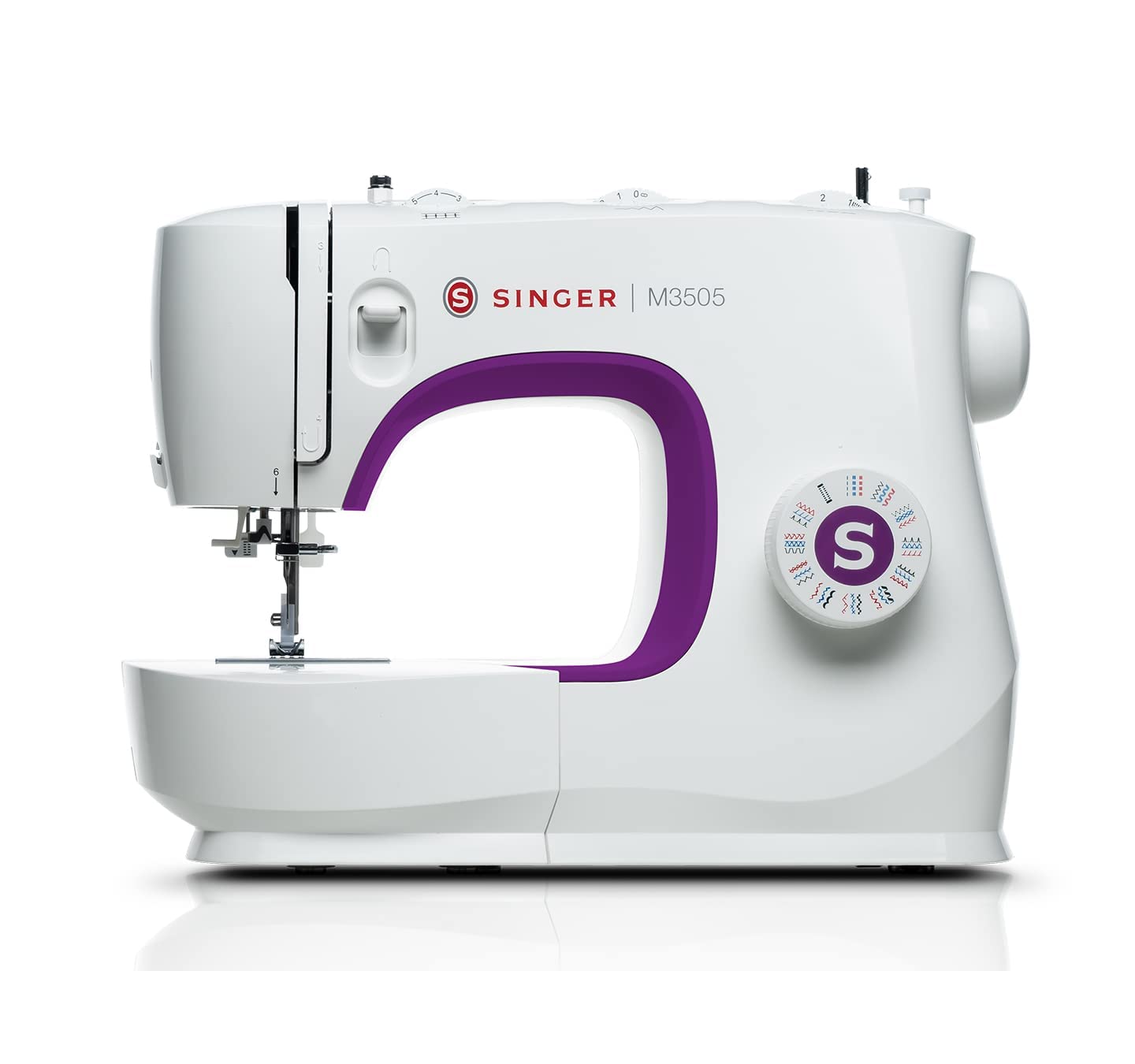
The Singer M3505 Motorised Automatic Zig-Zag Electric Sewing Machine sits in an interesting position between basic home sewing machines and more advanced computerized models.
It offers 32 stitches, including essential, decorative, and stretch options, along with adjustable stitch settings, a built-in needle threader, front-loading bobbin, one-step buttonhole functionality, and a fairly complete collection of sewing accessories.
That makes it considerably more versatile than a simple straight-stitch machine.
At the same time, the M3505 remains a mechanically controlled model. This becomes important when comparing its price with newer digital sewing machines offering substantially larger stitch libraries and more automation.
The available owner feedback is also mixed. Some users praise its smooth sewing and stitch quality, while another owner felt that the number of designs was too limited for the price and eventually sold the machine. There is also a complaint about a missing warranty card.
For home sewing, garment making, alterations, and hobby projects, the Singer M3505 can make sense. For a commercial sewing business that specifically needs a large library of decorative stitches, its limitations are more noticeable.
Check the Singer M3505 price and availability on Amazon
The 32-Stitch Setup Is the Main Upgrade
The headline feature of the Singer M3505 is its 32-stitch selection.
Singer describes the machine as offering basic, decorative, and stretch stitches, giving it enough variety for far more than ordinary straight sewing.
This makes it suitable for projects such as:
- garment construction,
- alterations,
- decorative stitching,
- stretch garments,
- edge finishing,
- zipper installation,
- button attachment,
- buttonholes,
- basic quilting,
- household sewing projects.
For someone upgrading from a traditional straight-stitch machine, the difference can feel substantial.
The ability to select different stitches gives the user more freedom to work with garment designs and finishing techniques without needing multiple specialized machines for simple household projects.
However, 32 stitches should be viewed in context.
For ordinary home sewing, 32 can be more than enough.
For someone comparing the M3505 with computerized machines offering 80, 100, or even more stitch patterns, the M3505 can appear relatively limited.
That difference becomes particularly important if decorative sewing is a major reason for buying the machine.
Stitch Length and Width Can Be Adjusted
Singer states that the M3505 allows the user to customize stitch width and stitch length.
This is more valuable than simply having a large number of stitch symbols printed on the machine.
Suppose two projects both use zig-zag stitching.
A narrow zig-zag may be appropriate for finishing an edge, while a wider pattern may work better as a decorative element.
Similarly, shorter and longer stitch lengths can change both the appearance and practical behavior of a seam.
Being able to adjust these settings gives the M3505 more flexibility than a machine where most stitch characteristics are fixed.
It also explains why there can be a learning period.
One same-model user described the machine as smooth but said some practice was required to understand the correct settings for different stitches.
That sounds believable for this type of mechanical multi-stitch machine.
Smooth Stitching Appears to Be One of Its Better Qualities
The limited customer feedback contains multiple positive comments about actual stitching performance.
One verified purchaser simply described it as a nice machine.
Another verified owner said it stitches well and regarded it as a genuine, good product.
A same-model user also described the machine as smooth after learning how to configure the stitch settings.
That distinction matters.
A sewing machine can advertise dozens of stitches, but if feeding is rough or stitch formation is inconsistent, the feature count becomes meaningless.
The available experiences suggest that the M3505 can produce satisfying results once correctly set up.
Because the review sample is small, however, there is not enough evidence to make sweeping claims about long-term reliability.
The Learning Curve Is Manageable, but It Is Real
The Singer M3505 should not be confused with a machine where every sewing decision is made automatically.
It uses mechanical controls, so the operator still needs to understand things such as:
- stitch selection,
- stitch length,
- stitch width,
- threading,
- bobbin installation,
- tension,
- presser-foot selection,
- fabric handling.
A beginner can certainly learn these things.
But a machine with 32 stitch options inevitably requires more experimentation than a very basic model.
Someone moving from an older traditional machine may initially find the number of controls unfamiliar.
The useful part is that Singer makes the full instruction manual available online, which can help with stitch selection and setup.
For a new user, it would be wise to test the machine first with scrap fabric instead of immediately starting an important garment.
Built-In Needle Threading Reduces a Small but Frequent Annoyance
The M3505 includes a needle threader.
This is a convenience feature rather than a performance feature, but it can save time when thread is changed frequently.
It may be particularly useful for:
- older users,
- people with weaker eyesight,
- users working with fine thread,
- beginners who struggle to guide thread through the needle eye.
It does not make the entire machine automatic.
But it removes one repetitive task from the sewing process.
Over regular use, small conveniences like this can noticeably improve the ownership experience.
The One-Step Buttonhole Is a Genuine Advantage
The M3505 has a one-step buttonhole function.
That is a meaningful upgrade over machines using four-step buttonholes.
With a one-step system, the machine is designed to complete the buttonhole process with less manual intervention.
This is particularly valuable for people sewing:
- shirts,
- kurtis,
- blouses,
- dresses,
- children’s clothes,
- cushion covers,
- other buttoned garments.
Someone mainly repairing hems may barely use the feature.
For garment makers, however, a one-step buttonhole can make the workflow noticeably easier.
The Front-Loading Bobbin Is Traditional Rather Than Modern
The M3505 uses a front-loading bobbin.
Singer describes it as easy to wind and insert.
Users familiar with traditional sewing machines may have no issue with this design.
Complete beginners, however, sometimes find a top-loading bobbin easier because the bobbin is more visible.
With a front-loading arrangement, the user has to become comfortable with:
- inserting the bobbin correctly,
- placing it in the bobbin case,
- routing the thread properly,
- reinstalling the case.
Once learned, the process becomes routine.
It is not a major drawback, but it is worth understanding before choosing between two machines.
The Included Accessories Are Quite Useful
The Singer M3505 comes with a fairly practical set of accessories, including:
- All-purpose foot
- Zipper foot
- Button sewing foot
- Pico foot
- Buttonhole foot
- Darning plate
- Bobbins
- Needles
- Seam ripper/lint brush
- Spool cap
- Edge/quilting guide
- L-type screwdriver
This means a new buyer can explore several sewing techniques without immediately purchasing a separate collection of presser feet.
The zipper foot is useful for garment construction.
The button sewing and buttonhole feet expand the machine beyond basic seams.
The quilting guide helps maintain more consistent spacing.
The seam ripper is simple but indispensable—especially for beginners.
The accessory package is one of the M3505’s better practical strengths.
It Weighs Around 7 kg, Which Makes It Portable Enough for Home Use
The listed weight is approximately 7.06 kg.
That places the machine in a useful middle ground.
It has enough mass to feel like a proper full-size home sewing machine, while still being manageable enough to move between a cupboard, table, or sewing area.
One owner specifically described the machine as portable enough despite criticizing the exterior plastic quality.
This portability can matter for users who do not have a permanent sewing room.
A heavy traditional machine often becomes furniture.
The M3505 is much easier to store when not in use.
The Body Uses Both Cast Iron and Plastic
The product information lists the material as cast iron and plastic.
One customer specifically criticized the plastic quality, calling it cheap, but also said the machine was durable and portable enough.
That combination is worth understanding.
Modern home sewing machines often use plastic exterior panels while relying on a stronger internal mechanical structure.
A plastic outer shell does not automatically mean poor performance.
However, someone accustomed to old metal sewing machines may feel the M3505 is less substantial in the hand.
The advantage is reduced weight.
The trade-off is that it may not provide the same heavy, industrial feeling some traditional sewing-machine users prefer.
Stretch Stitches Expand What You Can Sew
Singer says the machine offers stretch stitches, in addition to basic and decorative patterns.
This can be useful when working with:
- knit fabric,
- stretch tops,
- leggings,
- elastic materials,
- certain jersey fabrics.
Normal straight stitching can break when a stretchy seam is pulled.
A suitable stretch stitch is designed to accommodate more movement.
That gives the M3505 a meaningful advantage over very basic machines when clothing construction involves different fabric types.
Singer’s product description also references sewing materials ranging from sheer fabric and stretch knit to denim.
Still, that should not be interpreted as unlimited heavy-duty capability.
Occasional denim sewing and repeated industrial work on heavy multi-layer seams are very different demands.
It Is Better Suited to Home Sewing Than High-Volume Commercial Work
One of the most revealing customer reviews comes from an owner who liked the machine’s actual functionality but ultimately decided it was not suitable for their business needs.
The complaint was not that the machine failed to sew.
The problem was that the user wanted a much larger variety of designs and believed a digital machine with 100 or more stitches would make more sense commercially.
This distinction is important.
For a typical household user, 32 stitches may be plenty.
For a business offering customized decorative stitching, the same 32 stitches may feel restrictive.
So the M3505’s suitability depends heavily on what “business use” means.
It could still work for:
- basic tailoring,
- alterations,
- straightforward garment assembly,
- occasional decorative work.
It becomes less attractive for:
- design-heavy boutique work,
- customers requesting many decorative stitch styles,
- businesses requiring computerized repeatability,
- users expecting hundreds of stitch options.
The machine is not inherently unsuitable for every paid sewing task.
It simply lacks the extensive design library of more advanced digital models.
Mechanical vs Computerized Sewing Is the Real Buying Decision
The M3505’s price becomes most interesting when compared with computerized alternatives.
Mechanical machines have advantages.
They are usually:
- straightforward,
- tactile,
- familiar,
- easy to understand once learned,
- free from complicated screens and menus.
Computerized models, however, can provide:
- far more stitch patterns,
- easier stitch selection,
- digital displays,
- preset stitch settings,
- more advanced automation.
Someone sewing normal garments at home may prefer the mechanical simplicity of the M3505.
Someone buying specifically for creative stitch variety may quickly wish they had chosen a digital machine.
This is the single biggest strategic question surrounding the M3505.
Check the current Singer M3505 listing on Amazon
The Customer Rating Needs to Be Interpreted Carefully
The listing shows an overall rating of 3.6 out of 5 stars from 10 global ratings.
The distribution is unusual:
- 5 stars: 51%
- 4 stars: 0%
- 3 stars: 21%
- 2 stars: 15%
- 1 star: 13%
More than half of the ratings are five-star.
However, nearly three in ten fall into the one- or two-star categories.
With only ten total ratings, this creates a very unstable average.
A single new rating could change the overall score meaningfully.
So the 3.6-star figure should not be treated as strong evidence that the machine is either excellent or poor.
The detailed feedback is more useful.
Those comments suggest good stitch performance and smooth operation, while raising questions around price, included documentation, plastic feel, and whether 32 stitch choices are enough for more demanding users.
Missing Warranty Card: Check the Box Immediately
One verified buyer reported that the warranty card was missing from the package.
That is an isolated report rather than a pattern of widespread missing components.
Still, warranty paperwork matters for a sewing machine.
When the product arrives, check immediately for:
- warranty documentation,
- invoice,
- instruction information,
- all included presser feet,
- bobbins,
- needles,
- darning plate,
- seam ripper,
- quilting guide,
- screwdriver.
If something is missing, dealing with it during the return or replacement window is much easier than discovering the problem months later.
The product information also lists Singer India’s customer-care number, so keeping the invoice and product documentation organized is sensible.
Test All 32 Stitch Functions You Actually Plan to Use
A common mistake when buying a multi-stitch machine is checking only the straight stitch after delivery.
That does not fully test what you paid for.
After receiving the M3505, try at least:
- straight stitching,
- zig-zag,
- reverse stitching,
- several decorative stitches,
- a stretch stitch,
- different stitch lengths,
- different stitch widths,
- the one-step buttonhole,
- the needle threader,
- bobbin winding.
It is not necessary to test every decorative pattern immediately, but the main controls should be checked while return options are still available.
Price Is Critical With the M3505
The current supplied Amazon listing marks the Singer M3505 as unavailable, so there is no active selling price to evaluate.
That matters because this machine’s value changes substantially depending on price.
The supplied listing shows nearby Singer alternatives spanning from simple entry-level models to machines with much larger stitch collections.
One customer explicitly felt the M3505 was expensive relative to its number of designs.
That opinion should not be treated as a universal pricing rule, but the underlying point is valid:
Do not buy the M3505 solely because it has more stitches than a basic machine.
Compare what else is available at the same price.
If a computerized model with substantially more features costs only a little more, the M3505 becomes harder to justify for someone focused on decorative work.
If the M3505 appears at an attractive sale price, its balance of simplicity and functionality becomes much stronger.
Singer M3505 vs Singer M3305
The Singer M3305 is one of the most obvious alternatives because the models are positioned similarly.
The key difference is stitch capacity.
The M3305 offers 23 stitches, while the M3505 provides 32.
Both emphasize:
- automatic zig-zag sewing,
- built-in needle threading,
- one-step buttonholes,
- front-loading bobbins,
- home garment sewing.
The M3505 makes more sense when the extra stitch choices are genuinely useful.
If the price difference becomes large, however, someone mostly using straight stitch, zig-zag, basic stretch stitches and buttonholes may get similar practical value from the less expensive model.
Singer M3505 vs a 100-Stitch Computerized Machine
This is where the decision becomes clearer.
Choose the M3505 if you value:
- mechanical controls,
- simpler operation,
- enough stitches for normal home projects,
- physical dials rather than menus,
- portability,
- straightforward garment sewing.
Consider a computerized model if you want:
- far more decorative stitches,
- advanced creative sewing,
- digital selection,
- more automatic functions,
- commercial design variety.
There is no universally better choice.
It depends on whether simplicity or stitch variety matters more.
Who Is the Singer M3505 Best For?
The machine makes the most sense for someone who wants a versatile home sewing machine without moving into a full computerized platform.
That includes:
- beginners willing to learn stitch settings,
- intermediate home sewers,
- garment-making hobbyists,
- users doing alterations,
- people sewing stretch and woven fabrics,
- occasional quilting projects,
- users upgrading from a basic straight-stitch machine.
It offers enough capability to grow with a beginner without becoming overwhelmingly complex.
Who Should Consider Something Else?
Another machine may make more sense for:
Commercial decorative-sewing businesses
Thirty-two stitches may become restrictive quickly.
Users who want hundreds of patterns
A computerized model is the obvious direction.
People who mainly repair clothes
A simpler machine may provide better value.
Buyers who dislike plastic-bodied machines
Although the M3505 includes cast-iron components, its exterior uses plastic.
Buyers who want the lowest possible learning curve
The multiple stitch settings still require practice.
Main Strengths of the Singer M3505
The strongest reasons to consider it are:
- 32 basic, decorative and stretch stitches
- Adjustable stitch width and length
- Built-in needle threader
- One-step buttonhole
- Front-loading bobbin
- Useful included presser feet
- Good accessory package
- Smooth stitching reported by owners
- Portable 7 kg class design
- Suitable for a variety of home sewing projects
- Stretch-stitch capability
- Straightforward mechanical operation
Main Limitations
The more important weaknesses are:
- Only 10 global ratings on the supplied listing
- Overall rating is a middling 3.6/5
- 32 stitches may feel limited beside computerized machines
- One owner considered the price too high for the available designs
- Plastic exterior quality did not impress one customer
- Some learning is required to configure stitch settings correctly
- One verified buyer received the machine without a warranty card
- Current Amazon listing is unavailable
Is the Singer M3505 Worth Buying?
The Singer M3505 is a capable home sewing machine whose value depends far more on the buyer’s needs and the current price than on its headline 32-stitch count.
For ordinary home sewing, 32 stitches are not necessarily “limited.” They provide enough variety for garment construction, stretch fabrics, decorative work, buttonholes, repairs and general creative projects.
The machine also includes several genuinely useful conveniences: a needle threader, adjustable stitch dimensions, a one-step buttonhole and a strong selection of accessories.
Available owner feedback suggests that the machine can sew smoothly and produce good stitches once the settings are understood.
The issue appears when it is purchased for the wrong purpose.
Someone running a business where customers expect a large catalogue of decorative patterns may quickly outgrow a 32-stitch mechanical machine.
Someone who simply wants a flexible, portable home sewing machine may never need more.
Because the Amazon listing supplied for this review is currently unavailable, it is worth comparing its eventual selling price against both the less expensive Singer M3305 and newer computerized options before purchasing.
Check Singer M3505 availability and current price on Amazon
For home garment sewing, repairs, hobby work and users who prefer mechanical controls, the Singer M3505 remains a sensible option. For a design-focused business or someone who wants a much larger stitch library, spending the money on a computerized machine is likely to make more sense.