Usha Bandhan Straight Stitch Composite Sewing Machine Review: Affordable and Traditional, but Delivery Quality and Reliability Need Careful Attention
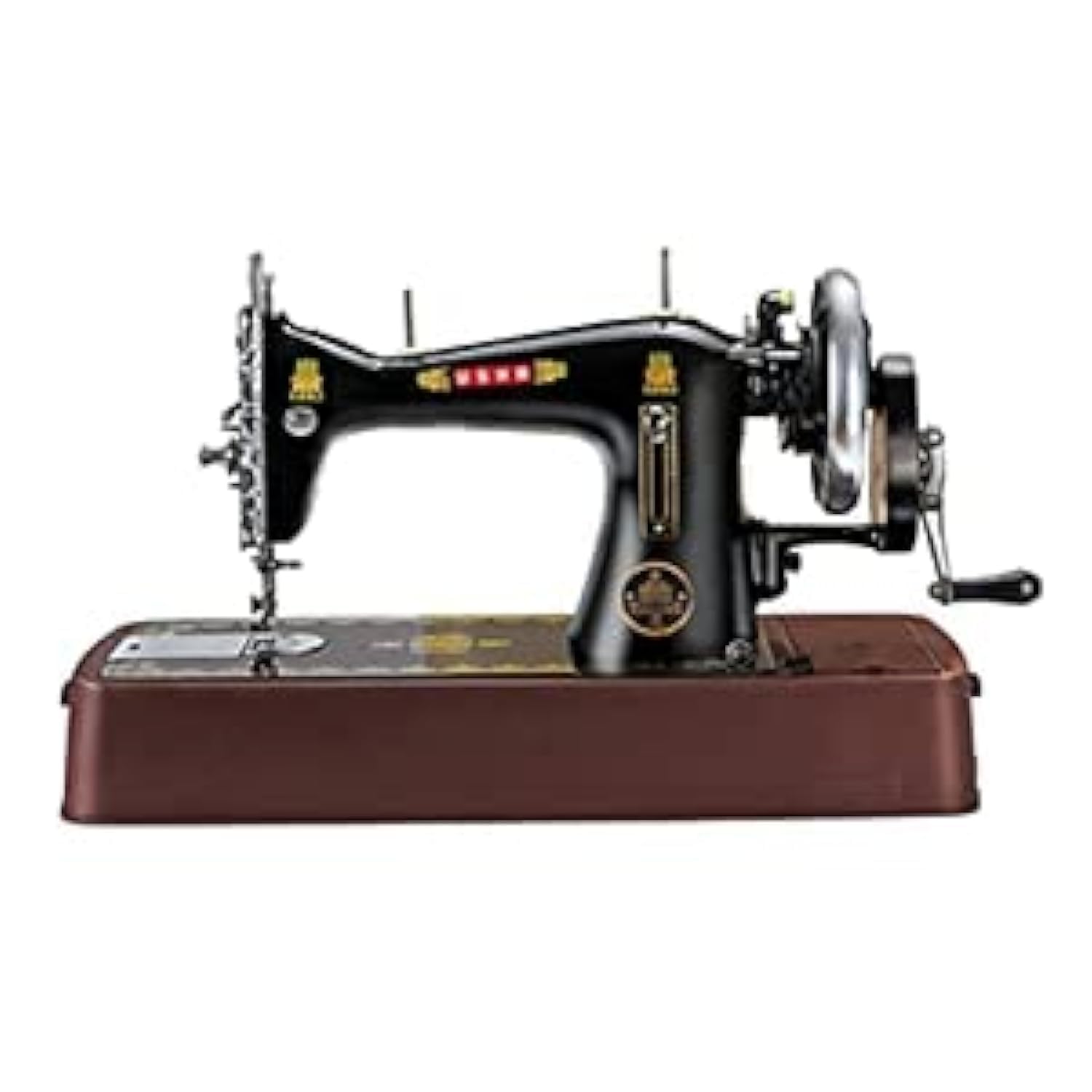
The Usha Bandhan Straight Stitch Composite Sewing Machine (Black) is designed for buyers who prefer a traditional straight-stitch machine rather than a modern automatic or computerized model.
Its appeal is straightforward. It offers a familiar mechanical sewing experience, basic forward and reverse stitching, adjustable pressure, a bobbin-winding system, and the option to operate with a motor. At a listed price of around ₹5,250, it sits in the economy segment of Usha’s straight-stitch range.
For someone accustomed to older-style sewing machines, the Bandhan can feel simple and familiar. There are owners who describe it as good value, useful for everyday stitching, and suitable for beginners.
However, the customer feedback also reveals several important concerns that should not be overlooked. Complaints about damaged or used-looking units, missing parts, poor assembly, jamming, difficulty with thicker fabric, and after-sales service appear often enough to materially affect the buying decision.
The machine itself is simple. The bigger uncertainty appears to be the condition in which some units arrive and what happens if servicing is needed later.
Check the latest Usha Bandhan price and availability on Amazon
What Kind of Sewing Machine Is the Usha Bandhan?
The Bandhan is a straight-stitch mechanical sewing machine built around a traditional design.
It is very different from modern automatic sewing machines that provide multiple decorative stitches, automatic buttonholes, LCD panels, speed controls, and electronic stitch selection.
The Bandhan focuses on the fundamentals.
Its main listed features include:
- Lever-type stitch regulator
- Forward and reverse stitching
- Auto-tripping bobbin winder
- Spring-loaded bobbin winding system
- Screw-type pressure adjustment
- Closed-type shuttle race
- Slide plate for bobbin access
- Compatibility with different stand and base arrangements
- Option to operate with a motor
This makes it closer in character to the traditional machines that have been used in Indian homes and tailoring environments for decades.
That simplicity can be an advantage—but only for the right buyer.
The Straight-Stitch Design Is Both Its Strength and Its Limitation
The Usha Bandhan is not trying to compete with automatic zig-zag machines.
Its purpose is much narrower: reliable straight stitching for basic sewing work.
For someone primarily stitching seams, doing alterations, working on simple garments, repairing clothes, or performing regular household sewing, that may be enough.
A straight-stitch machine can also appeal to users who prefer a mechanical system that is easy to understand and does not involve electronic controls.
But anyone expecting decorative stitching, zig-zag, buttonholes, or multiple stitch patterns should look elsewhere.
The Bandhan is best understood as a traditional sewing machine rather than an all-purpose modern sewing platform.
Forward and Reverse Stitching Adds Practical Control
The machine uses a lever-type stitch regulator with forward and reverse functionality.
Reverse stitching is useful for reinforcing the beginning and end of a seam.
Instead of tying every seam manually, the user can reverse over a short section to help lock the stitches in place.
For everyday garment sewing, this is a basic but important function.
The lever-based system also keeps operation mechanical and straightforward.
For someone already familiar with old-style straight-stitch machines, there should be little conceptual adjustment required.
Bobbin Winding Is Designed to Be Simple
Usha lists an auto-tripping, spring-loaded bobbin winder.
The purpose is to help wind the bobbin evenly and stop the process appropriately once winding is complete.
Uniform bobbin winding matters because poorly wound thread can contribute to inconsistent feeding, tangling, and poor stitch formation.
The machine also uses a slide plate that gives access to the bobbin area.
These are not glamorous features, but on a traditional sewing machine they directly affect everyday convenience.
Pressure Adjustment Gives Some Control Over Fabric Feeding
The Bandhan includes screw-type pressure adjustment for controlling presser pressure.
This can matter when working with fabrics of different thicknesses.
A lighter material and a somewhat heavier fabric may not behave identically under the presser foot, so some mechanical adjustment can help improve feeding.
However, buyers should not interpret this as meaning the machine is automatically suitable for any thick material.
One customer specifically reported difficulty when the fabric became thicker, including needle breakage when passing through thicker sections.
That does not establish a universal limitation for every machine, but anyone planning frequent work with heavy, layered fabric should take it seriously.
This model makes more sense for ordinary garment and household sewing than for demanding heavy-duty applications.
The Option to Add a Motor Makes the Design Flexible
The product information states that the Bandhan can be operated with a motor option.
That flexibility is useful because some buyers may prefer the traditional manual setup, while others may want to convert it into a powered machine.
The product is also listed as being compatible with different foot and base configurations, including stand variants and plastic base-cover options.
This modularity is typical of traditional straight-stitch machines.
But there is an important practical point: buyers need to understand exactly what is included with the particular Amazon listing.
Some customer complaints involve missing covers, missing components, or receiving a setup that was not fully ready for use.
So the distinction between what the machine supports and what is actually included in the box matters.
Setup May Not Be Truly Ready-to-Sew Out of the Box
One of the more useful customer observations comes from a buyer who considered the machine good value but still had to pay separately for setting or adjustment after delivery.
This matters.
Traditional mechanical sewing machines sometimes need proper assembly, alignment, tension adjustment, or setup before they work as expected.
An experienced user or local mechanic may find that easy.
A complete beginner may not.
This is one reason the Bandhan is not automatically the easiest option simply because its design is mechanically simple.
A modern entry-level machine may actually be easier for a beginner if it arrives fully assembled and calibrated.
The Bandhan may suit someone who already understands traditional machines or has access to a sewing-machine mechanic nearby.
Beginners Can Use It, but the Learning Experience Is Mixed
There are positive comments describing the machine as suitable for beginners.
At the same time, another owner described it as tricky to get accustomed to, particularly for users coming from a different style of older machine.
Another buyer explicitly warned beginners against purchasing the machine online because their unit arrived with faulty parts and they struggled to obtain satisfactory assistance.
So “beginner-friendly” needs qualification.
It may suit a beginner who:
- has someone experienced to help with setup,
- understands basic threading and bobbin operation,
- has access to a local sewing-machine technician,
- wants to learn traditional mechanical sewing.
It may frustrate a beginner who:
- expects a fully assembled plug-and-sew experience,
- has never threaded a traditional machine,
- does not know how to adjust tension or pressure,
- has no local repair support.
That distinction is more important than simply calling the machine easy or difficult.
The Customer Rating Shows a Divided Ownership Experience
The Usha Bandhan has an overall rating of 3.4 out of 5 stars from 521 global ratings.
The rating distribution is revealing:
- 5 stars: 42%
- 4 stars: 17%
- 3 stars: 11%
- 2 stars: 4%
- 1 star: 26%
That means a majority of customers rate the product four or five stars.
But the 26% one-star share is unusually large.
This is not a product where most owners simply describe it as average.
Instead, the experiences appear polarized.
Some buyers receive a machine that works well and provides reasonable value.
Others report substantial problems immediately or after relatively limited use.
That makes purchase condition, seller quality, assembly, and after-sales support unusually important.
Read current Usha Bandhan customer feedback on Amazon
Positive Feedback: When It Works Properly, Buyers Appreciate the Simplicity
Not all customer experiences are negative.
Several owners simply describe the Bandhan as a good product.
One verified buyer said the machine worked well for emergency stitching needs.
Another described it as very good and good value for money, although that buyer had to pay for setup after delivery.
Other customers describe it as:
- good,
- useful,
- suitable for beginners,
- appropriately priced,
- and satisfactory for straightforward sewing.
This suggests the core design itself can meet its intended purpose.
The main problem is that these positive experiences exist alongside a large number of complaints about product condition and reliability.
Delivery Condition Is the Most Concerning Pattern
One of the strongest recurring themes is the condition in which some machines reportedly arrived.
Customers have described receiving:
- missing parts,
- broken parts,
- scratched machines,
- poorly assembled units,
- damaged boxes,
- incomplete covers,
- units that appeared used,
- units that seemed old or refurbished,
- machines that were not functioning correctly on arrival.
These complaints are much more important than a cosmetic issue.
A traditional mechanical sewing machine relies heavily on correct alignment and assembly.
A slightly bent component, improperly fitted mechanism, jammed shaft, or incorrect setting can make the entire machine unpleasant or impossible to operate.
So checking the machine immediately after delivery is essential.
Do not leave it packed away for weeks.
What to Check Immediately After Delivery
Before the return or replacement window becomes an issue, inspect the machine carefully.
Check the following:
- Overall body for scratches or signs of prior use
- Handwheel movement
- Needle movement
- Presser-foot mechanism
- Forward and reverse lever
- Bobbin-winding mechanism
- Shuttle movement
- Slide plate
- Thread stand and related parts
- Base or cover components
- Screws and fittings
- Included accessories
- Whether the machine turns freely
- Whether the needle travels correctly
- Whether straight stitches form consistently
If something seems excessively tight, jammed, broken, rusty, bent, or incomplete, it is better to deal with it immediately rather than assuming it will improve after use.
Jamming and Hard Operation Appear in Multiple Complaints
Some owners describe the machine as being very tight or jammed.
One customer said the machine ran hard and felt as though it might be old.
Another reported frequent jamming despite only minimal usage.
Another owner had the machine repaired multiple times but said the problem persisted.
These reports matter because smooth mechanical operation is fundamental to a straight-stitch machine.
A properly set traditional sewing machine should not feel unnecessarily stiff.
Some stiffness can sometimes be related to setup, lubrication, alignment, or adjustment, but buyers should not accept severe resistance as normal.
Thicker Fabric May Be a Weak Point for Some Users
A notable customer complaint says the machine struggled when fabric became thicker and that the needle could break at thicker areas.
That should not automatically be generalized to every Bandhan machine.
Still, it raises an important expectation issue.
A traditional black straight-stitch machine often looks visually “heavy duty,” but that does not automatically mean every version can sew through any thick material without adjustment.
Material type, needle size, thread, presser pressure, seam thickness, and machine condition all matter.
For routine cotton garments and ordinary household sewing, the machine may be adequate.
For frequent denim layers, heavy upholstery material, canvas, or thick stacked seams, buyers should not assume professional heavy-duty capability.
Finishing Quality Is Another Mixed Area
Some buyers are happy with the product for the price.
Others describe the finishing as below expectations.
Reports include scratches, poor assembly, broken parts, or units that appeared touched up.
Again, some of this may reflect fulfilment and seller condition rather than Usha’s original factory design.
But for the buyer, the distinction matters less when the product arrives at the door in poor condition.
This is why seller selection is especially important with this listing.
Missing Parts Are Not an Isolated Complaint
Multiple reviews mention something being missing.
Examples include:
- an upper cover,
- unspecified parts,
- components expected with the machine.
One buyer still considered the machine good for beginners despite receiving missing parts.
But buyers should not have to accept incomplete delivery.
Before ordering, look carefully at the current product images and package description.
After delivery, compare the contents with what was promised.
Traditional sewing machines can also be sold in several configurations, so it is important to distinguish between an accessory that was never included and a component that is genuinely missing.
After-Sales Service Is a Serious Consideration
Several negative experiences involve customer service.
One owner reported problems after only a few months and said they were asked to pay separately for service.
Another more recent buyer said their machine was not working and that they were still waiting for support.
Others describe difficulty getting satisfactory assistance after receiving faulty or damaged products.
These are customer experiences rather than a guarantee of how every warranty claim will be handled.
Still, the pattern is significant enough that buyers should investigate service arrangements before purchasing.
The current Amazon listing showed a one-year warranty, but buyers should still confirm exactly what that warranty covers and how service is provided in their area.
Do not assume that seeing “1 Year Warranty” automatically means doorstep repair or free servicing for every mechanical problem.
Why Local Sewing-Machine Support Could Make a Big Difference
This is a traditional mechanical machine.
That can actually work in its favor when good local support exists.
An experienced sewing-machine technician may be able to handle routine jobs such as:
- timing adjustment,
- shuttle adjustment,
- lubrication,
- tension setup,
- bobbin alignment,
- needle positioning,
- pressure adjustment,
- motor fitting,
- general maintenance.
For someone living near a reliable sewing-machine mechanic, ownership may be much easier.
For someone with no nearby support, the same machine can become frustrating if it arrives poorly adjusted.
That makes local service availability part of the purchasing decision, not an afterthought.
The ₹5,250 Price Is Attractive—but Price Alone Should Not Decide It
The listing showed the Usha Bandhan at approximately ₹5,250, against an MRP of ₹6,599.
At that level, it is much cheaper than automatic zig-zag models.
That affordability is a major part of the appeal.
For someone who needs only straight stitching, spending ₹12,000–₹20,000 on a more advanced automatic machine may be unnecessary.
However, the low initial price becomes less attractive if the buyer then has to pay for:
- setup,
- repairs,
- missing accessories,
- servicing,
- replacement parts,
- or motor/stand additions.
One customer specifically reported having to pay separately for machine setting.
So compare the complete usable setup cost, not only the Amazon purchase price.
Manual Straight-Stitch vs Automatic Sewing Machine
The Bandhan makes sense when simplicity is the priority.
Choose a machine like the Usha Bandhan if you mainly want:
- straight stitching,
- simple garment work,
- alterations,
- basic household sewing,
- traditional mechanical operation,
- potentially lower purchase cost,
- the ability to use a familiar old-style setup.
Consider an automatic zig-zag model instead if you want:
- multiple stitch patterns,
- buttonholes,
- decorative stitching,
- easier out-of-box operation,
- modern portability,
- built-in electric controls,
- less dependence on mechanical setup.
The Bandhan is not inferior simply because it has fewer functions. It is a different type of machine.
The mistake would be buying it while expecting the convenience of a modern automatic model.
Who Is Most Likely to Be Happy With the Usha Bandhan?
The strongest fit is someone who already understands traditional sewing machines.
It can also work for a beginner who has help available.
The ideal buyer is likely to:
- need mainly straight stitches,
- value mechanical simplicity,
- sew ordinary clothing materials,
- have space for a traditional setup,
- have access to a sewing-machine mechanic,
- carefully inspect the delivered machine,
- and prioritize price over advanced functions.
For that buyer, the Bandhan can be a practical basic sewing machine.
Who Should Think Twice?
Several buyers would be better served by another model.
Complete beginners without local help
The possibility of adjustment or setup makes a modern ready-to-use machine potentially easier.
Buyers sewing thick materials regularly
The customer report of problems around thicker sections deserves consideration.
Buyers wanting decorative stitches
This is fundamentally a straight-stitch machine.
Anyone who wants maximum portability
The traditional design is different from compact modern tabletop electric machines.
Buyers without access to repair support
Customer service complaints make this especially relevant.
Anyone unwilling to inspect and test the machine immediately
Given the reports of damaged, incomplete, or used-looking units, this is not a product that should remain unopened until after the replacement period.
Main Advantages of the Usha Bandhan
The useful strengths are fairly clear:
- Affordable traditional sewing-machine design
- Straightforward mechanical operation
- Forward and reverse stitching
- Adjustable pressure
- Bobbin-winding mechanism
- Closed shuttle race
- Option for motor operation
- Familiar design for experienced traditional-machine users
- Suitable for basic straight-stitch sewing
- Some buyers report good value for money
Main Concerns
The concerns are more substantial than usual:
- 3.4/5 overall rating
- 26% of ratings are one-star
- Multiple complaints about missing components
- Reports of damaged or scratched units
- Some units described as used-looking
- Reports of jamming or stiff movement
- Mixed durability feedback
- Thick-fabric limitations reported by at least one owner
- Some buyers needed paid setup
- Customer-service experiences are inconsistent
- Product condition appears to depend heavily on the delivered unit
Is the Usha Bandhan Straight Stitch Sewing Machine Worth Buying?
The Usha Bandhan Straight Stitch Composite Sewing Machine can make sense for the right buyer, but it is not a risk-free recommendation.
Its basic concept is sound.
It is an affordable traditional straight-stitch machine with mechanical controls, reverse stitching, pressure adjustment, bobbin-winding features, and the option to operate with a motor.
When buyers receive a properly assembled and correctly adjusted unit, some describe it as good, useful, and worthwhile for everyday sewing.
The concern is consistency.
There are simply too many reports involving damaged units, missing parts, poor assembly, used-looking machines, jamming, reliability problems, and difficult service experiences to ignore.
That does not mean every machine will have these problems.
It does mean the buyer should be more careful than usual.
The best-case buyer is someone who already knows this style of sewing machine, has access to local technical help, needs mainly straight stitching, and is willing to inspect and test the machine immediately after delivery.
For a complete beginner who wants something ready to sew with minimal adjustment, a modern entry-level electric model may provide a less frustrating ownership experience.
Check the current Usha Bandhan price, seller and availability on Amazon
The Usha Bandhan’s biggest attraction is its low-cost traditional simplicity. Its biggest weakness is that the ownership experience appears to depend heavily on receiving a properly assembled, complete, and well-adjusted unit.
For that reason, it is worth buying only after checking the seller, return terms, warranty details, and local service options carefully.