Brother GS 1700 Sewing Machine Review: Easy for Beginners, but Service and Needle-Threader Concerns Matter
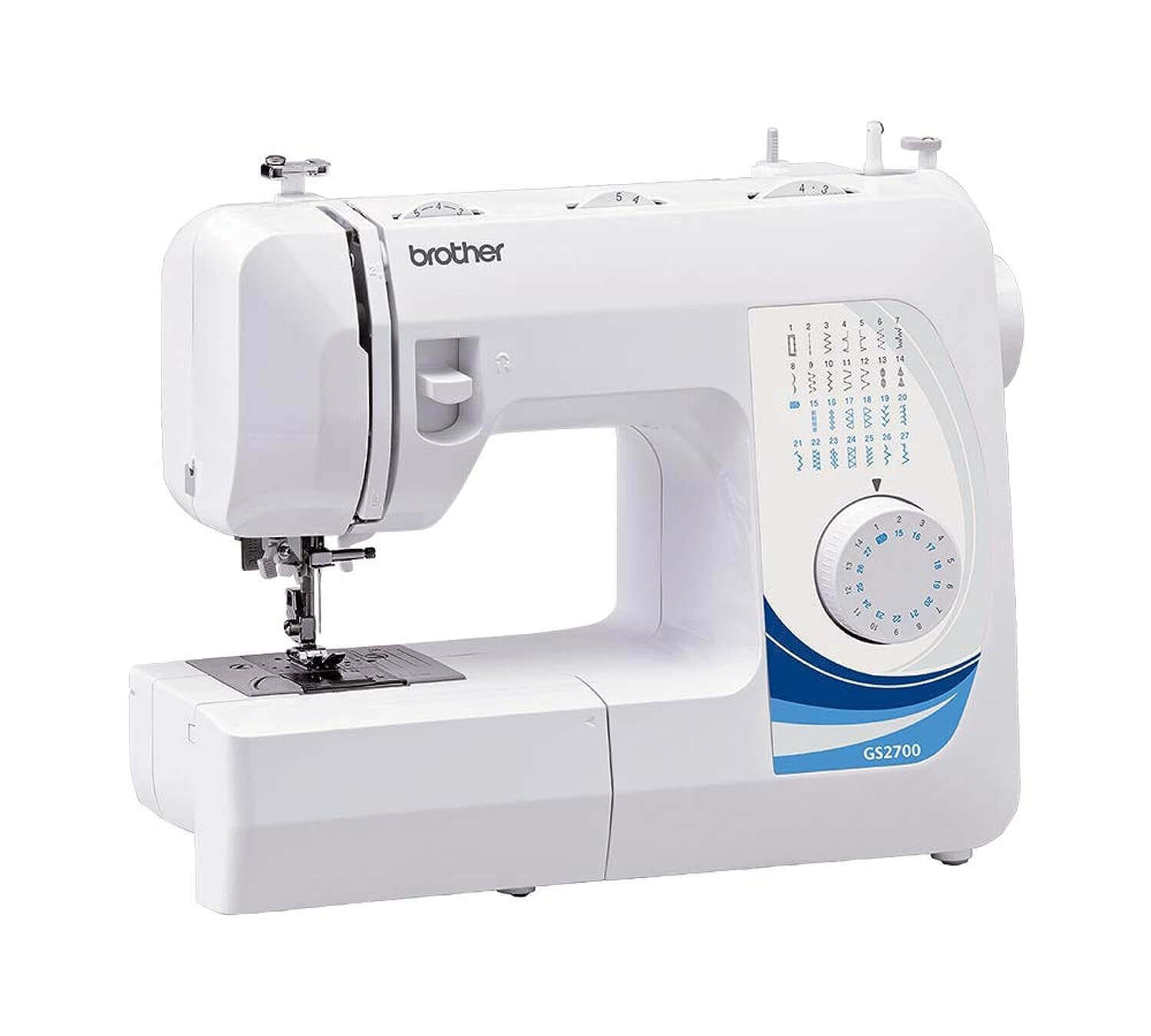
The Brother GS 1700 is the kind of sewing machine that makes sense on paper for home users who want something more capable than a basic straight-stitch machine without moving into a complicated computerized model.
Its core package is practical: 17 built-in stitching modes, an LED work light, top-loading bobbin, automatic needle-threading system and a four-step buttonhole function. Amazon lists the machine at 7 kg with dimensions of 15 × 39 × 31 cm, so this is a proper full-size home sewing machine rather than an ultra-light mini model.
What makes the GS 1700 interesting, however, is not the specification list. The stronger theme in owner feedback is how approachable it feels to use. At the same time, the reviews reveal two things worth understanding before buying: the automatic needle threader is not trouble-free for everyone, and after-sales service can depend heavily on where you live.
Check the Latest Price of the Brother GS 1700 on Amazon
Its biggest strength is straightforward everyday sewing
For a beginner, a machine can have dozens of features and still be frustrating if threading, stitch selection and fabric handling feel difficult. The Brother GS 1700 appears to do well on the basics.
Ease of use comes up repeatedly in customer feedback. Buyers describe it as smooth, easy to operate and suitable for beginners, while several specifically position it as a good machine for home sewing. Some owners also mention relatively quiet operation and smooth performance.
That combination matters more than it may initially seem.
A home sewing machine is often used intermittently rather than every day. If someone pulls the machine out to alter clothes, repair seams, work on small craft projects or practise sewing, they usually do not want to relearn an awkward control system every time.
The GS 1700’s mechanical controls and relatively straightforward feature set appear well suited to that kind of use.
One buyer reported using the machine for around six months without problems, while another described it as easy enough for beginners and praised its quiet, smooth operation. Those experiences do not guarantee long-term reliability, but they reinforce the broader impression that the machine’s day-to-day sewing experience is one of its stronger areas.
The 17 stitching modes are useful without making the machine unnecessarily complicated
Seventeen stitching modes place the GS 1700 above machines designed only for basic straight stitching while keeping it considerably simpler than models built around dozens of decorative functions.
For typical home use, that is a sensible middle ground.
You have more flexibility for different sewing jobs and decorative work, while the four-step buttonhole adds another useful garment-making function. Brother also includes an LED-lit sewing area and a top-load bobbin.
The practical value here is versatility rather than sheer stitch count.
If most of your work involves alterations, learning to sew, household repairs, simple garments and occasional decorative stitching, 17 modes may be more useful than paying substantially more for dozens of functions you rarely touch.
A customer specifically praised the number of stitch options and described the machine as very easy for beginners.
There is also evidence that buyers appreciate the machine’s physical build. Some reviews describe it as sturdy, while one owner who had used it for six months reported trouble-free operation during that period.
Explore the Brother GS 1700 on Amazon and Check Its Current Price
The automatic needle threader is convenient — but it is also the feature to watch
Automatic needle threading is one of the GS 1700’s more attractive convenience features, particularly for beginners or anyone who dislikes manually feeding thread through a small needle eye.
Brother lists the automatic needle-threading system as a standard feature.
And when it works properly, owners clearly appreciate it. One buyer called the self-threading mechanism a thoughtful feature.
But this is also where one of the clearest recurring complaints appears.
One verified buyer reported receiving the machine with a needle threader that was not working properly, while another said the built-in needle threader stopped working after a few months.
That does not mean every GS 1700 will develop the problem. Most of the reviews are not centered on needle-threader failure, and the machine still has a 4.2/5 overall rating in the supplied Amazon review set.
Still, because the complaint appears more than once, it deserves more attention than an isolated negative review.
If automatic threading is one of the main reasons you are choosing this model, test that mechanism soon after delivery rather than assuming it will be fine.
Noise and general sewing feel appear to be strong points
Sewing-machine specifications rarely tell you much about how pleasant a machine feels while actually running.
Here the customer feedback is more useful.
Several owners describe the GS 1700 as smooth, and more than one comment specifically mentions relatively low noise or quiet operation. One verified review described it as smooth, fast and low-noise, while another praised it as “super smooth” and “very quiet.”
For home use, quieter operation is especially valuable when sewing in a shared living space or working for longer sessions.
There is not enough evidence here to make a precise noise-performance claim against competing models, but the positive comments about smoothness and sound are frequent enough to be meaningful.
Do not mistake beginner-friendly for completely self-explanatory
The GS 1700 appears easier to learn than many more feature-heavy machines, but new users should still expect some setup and practice.
One buyer specifically complained that no representative was available to demonstrate how to use the machine.
That complaint is important because people buying their first sewing machine sometimes assume installation or an in-person demonstration will be part of the purchase experience.
It may not be.
If this is your first electric sewing machine, learning basic threading, bobbin installation, tension adjustment, presser-foot control and stitch selection may still require the manual or tutorial videos.
There is also one buyer report stating that the machine could not be operated without the foot pedal. That should be treated as an individual usage observation rather than a separately verified specification, but anyone specifically wanting push-button sewing without a pedal should investigate that point before purchasing.
After-sales support may matter more than the machine’s feature list
This is the area where potential buyers should pay the most attention.
Most customer feedback is positive toward the machine itself, but some of the more serious negative experiences concern service availability rather than basic sewing performance.
One customer complained about difficulty obtaining installation and warranty support after buying online. Another reported that after the machine stopped working, the nearest suitable service option was reportedly hundreds of kilometres away.
Those experiences should not be interpreted as proof that Brother service is poor everywhere in India. Service availability is inherently location-dependent, and another customer actually praised support received from the seller.
The useful takeaway is different: check whether convenient Brother service is available in your area before buying.
That is especially worthwhile if you live outside a major city.
A sewing machine is a mechanical appliance, and even a good machine may eventually require adjustment, repair or replacement parts. Convenient access to service can matter more over several years than an extra decorative stitch.
Reliability experiences are mostly positive, but not completely uniform
There are reassuring ownership reports.
One customer said the machine had worked flawlessly for about six months. Others describe smooth operation and satisfactory performance.
However, there are also reports of problems developing over time.
One buyer said the machine stopped working properly after roughly nine to ten months. Another reported failure after a few months and difficulty obtaining nearby service.
The evidence therefore does not support describing the GS 1700 as either unusually unreliable or completely worry-free.
A more useful interpretation is that the sewing mechanism receives plenty of positive feedback, while longer-term ownership becomes more dependent on maintenance and access to repair support.
Delivery should be inspected carefully
A small number of complaints relate more to fulfilment than to the design of the machine itself.
One verified customer received a damaged and non-working machine, while another reported receiving the wrong model.
There is also a positive counterexample: one buyer reported receiving the machine well packed with the expected accessories.
These are mixed delivery experiences rather than a consistent defect pattern.
Still, because a sewing machine is relatively heavy and mechanically sensitive, check the model number, accessories, casing, needle area, bobbin mechanism and basic operation as soon as the package arrives. Any obvious delivery damage is far easier to resolve inside the replacement window.
Check Customer Reviews and the Latest Price on Amazon
Who is the Brother GS 1700 best suited to?
The strongest fit is a beginner or home user who wants a traditional electric sewing machine with enough versatility to grow beyond very basic stitching.
It makes particular sense for someone who values:
- simple mechanical operation;
- multiple stitch choices without a complicated interface;
- relatively quiet and smooth sewing;
- a top-load bobbin;
- an LED-lit work area;
- automatic needle threading;
- buttonhole capability;
- and a full-size machine that still remains manageable for home use.
At 7 kg, it is movable when necessary, but it is not the kind of ultra-light machine you would constantly carry around.
The GS 1700 is less convincing for someone buying primarily because of the automatic needle threader, unless they are comfortable with the possibility that the mechanism may need attention later.
It also deserves extra consideration if local Brother servicing is difficult to access.
Is the Brother GS 1700 worth considering?
For ordinary home sewing and beginners, the Brother GS 1700 has a lot going for it. The combination of 17 stitching modes, top-load bobbin, LED lighting, buttonhole functionality and automatic threading gives it enough capability to handle far more than occasional straight-stitch repairs.
More importantly, the customer feedback repeatedly points toward the qualities that matter in everyday use: smooth operation, relatively low noise and beginner-friendly controls.
The reasons for hesitation are fairly specific rather than broad. The automatic needle threader has generated multiple complaints, and access to after-sales support has been frustrating for some buyers. Those issues are worth checking before purchase, particularly if you live far from an authorised service location.
For a buyer who wants a capable mechanical sewing machine for learning, alterations and general home projects — and who has reasonable access to service — the GS 1700 remains a credible option rather than simply a feature-heavy machine that looks good on a product page.
View the Brother GS 1700 on Amazon and Check Current Availability