Usha Umang Straight Stitch Sewing Machine Review: Simple, Affordable and Useful for Home Sewing — but Check the Delivered Unit Carefully
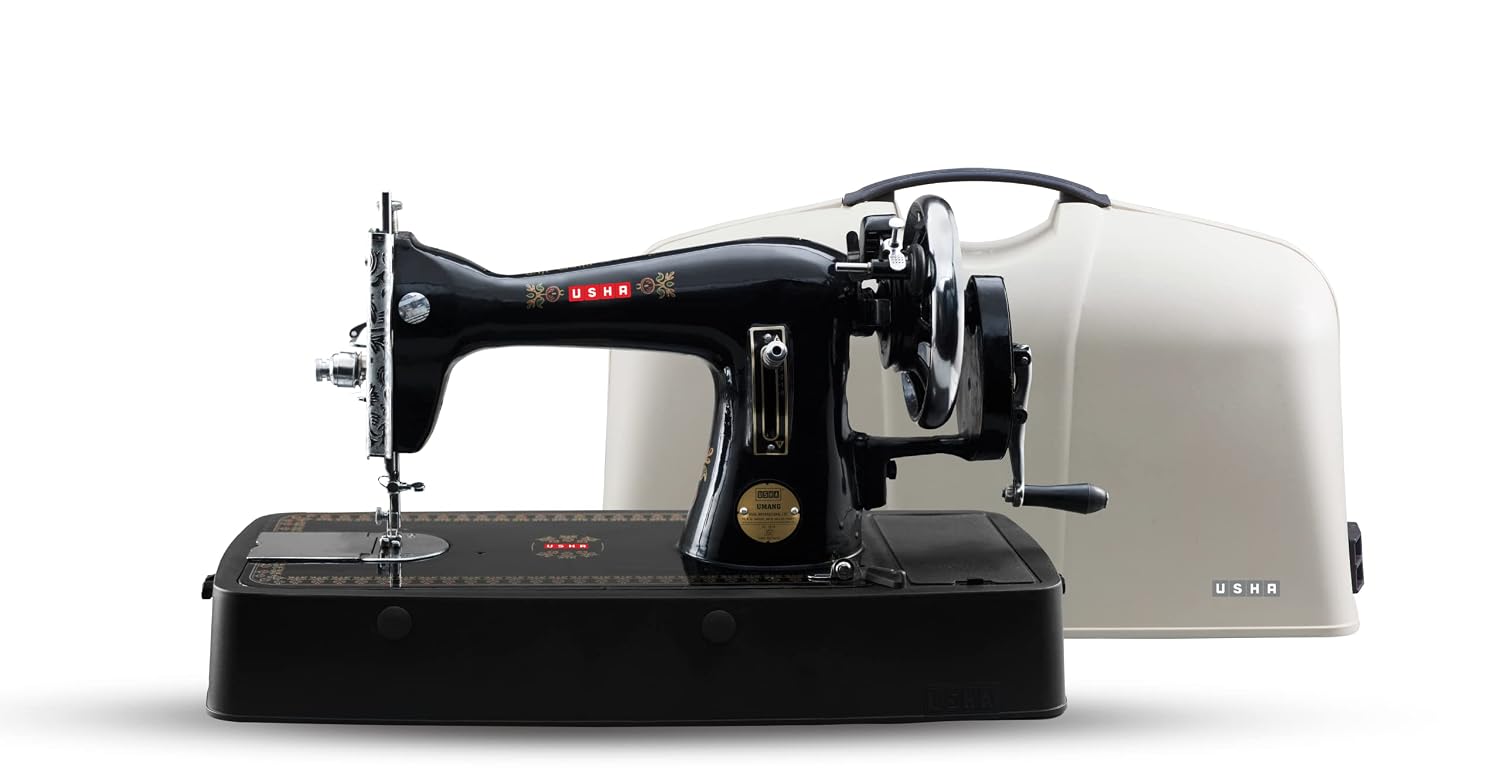
The Usha Umang Straight Stitch Composite Sewing Machine is designed for buyers who want traditional straight-stitch sewing without the complexity or cost of an automatic zig-zag or computerized machine.
Its appeal is straightforward. It uses a familiar mechanical design, offers forward and reverse stitching, adjustable pressure for different fabric weights, an accessible bobbin system and a heavy flywheel intended to provide steady torque. For basic home stitching, alterations and regular household sewing, that simplicity can be an advantage.
The customer experience, however, is unusually mixed. Many buyers describe the machine as smooth, sturdy, easy to operate and good value for home use. At the same time, there are enough reports of damaged, incomplete, previously used or malfunctioning units that the condition of the machine you actually receive deserves close attention.
That distinction is important. The underlying design appears to satisfy plenty of owners; a significant portion of the dissatisfaction comes from delivery condition, assembly-related problems, missing pieces and service experiences rather than from the basic concept of the machine itself.
Check the Latest Price of the Usha Umang Sewing Machine on Amazon
What Kind of Sewing Machine Is the Usha Umang?
The Usha Umang is a straight-stitch mechanical sewing machine.
That means buyers should not expect decorative patterns, automatic buttonholes, dozens of stitch styles or computerized controls. Its purpose is much simpler: provide traditional straight stitching for everyday sewing.
The current listing highlights several mechanical features:
- auto-tripping bobbin winder
- screw-type bobbin adjustment
- forward and reverse stitch control
- adjustable presser-foot pressure
- open-type shuttle race
- hinged slide plate for accessing the bobbin area
- extra-heavy flywheel
The machine is therefore aimed less at feature seekers and more at people who want a familiar sewing mechanism that can handle routine work.
For someone coming from an old-fashioned manual sewing machine, the controls and general operating style should feel recognizable.
Its Simplicity Is Both Its Strength and Its Limitation
There are two very different ways to look at the Usha Umang.
For a buyer who simply wants to:
- stitch clothes
- perform alterations
- repair garments
- sew household fabric
- practice basic sewing
- perform repeated straight stitching
the simple construction is appealing.
There are fewer electronic systems, menus or stitch programs to learn.
But someone expecting a modern multifunction sewing machine may quickly outgrow it.
There is no reason to pay for simplicity unless straight stitching is genuinely what you need. If decorative stitches, automatic features or multiple sewing functions are important, a zig-zag or automatic model would be a better category to consider.
The Heavy Flywheel Is More Important Than It Sounds
One of the more distinctive parts of the design is its heavy flywheel.
The product listing describes this as providing better torque when operating the machine.
In practical terms, the flywheel contributes to the traditional mechanical feel of the machine. Instead of the light controls found on compact electronic models, this type of mechanism is intended to maintain steady motion while stitching.
Positive customer feedback repeatedly describes the machine as running smoothly when the delivered unit is functioning correctly.
Some buyers specifically describe it as:
- smooth
- sturdy
- durable
- suitable for regular home sewing
- easy enough for beginners
That fits the intended character of the Umang: basic mechanical sewing rather than sophisticated electronic convenience.
Fabric Pressure Can Be Adjusted
Another useful feature is the screw-type pressure adjuster.
This allows pressure on the fabric to be adjusted for lighter, medium or heavier materials.
This matters because different materials do not always feed through a sewing machine equally well.
A thin fabric may need different handling from a thicker material, and the ability to adjust presser pressure gives the user more control than a completely fixed system.
The machine should not automatically be interpreted as an industrial heavy-duty model simply because it accommodates different fabric weights. It remains a domestic straight-stitch sewing machine.
Still, adjustable pressure makes it more flexible for normal household sewing than a machine designed around only one narrow fabric range.
Forward and Reverse Stitching Keeps Everyday Sewing Practical
The lever-style stitch regulator provides forward and reverse control.
Reverse stitching is particularly useful when reinforcing the beginning and end of a seam. Without it, securing stitches can be less convenient.
This is a basic function, but on a straight-stitch machine it is one of the functions that matters most in everyday use.
The Umang is therefore simple without being stripped down to the point of inconvenience.
Bobbin Access Is Designed to Be Straightforward — but Some Buyers Had Problems With the Base
The product design uses a hinged slide plate and accessible shuttle area to make bobbin insertion and maintenance easier.
That sounds good on paper, and some users report smooth operation.
However, this is also where an important customer complaint appears.
Several buyers reported difficulty opening or accessing the lower/base area of the machine. In some cases, customers believed the base was jammed or that they had received a previously used or damaged piece.
One longer-term buyer liked the machine and said it ran smoothly but still noted that the plastic base could be difficult to open when accessing the lower area for cleaning or bobbin-related work.
Other buyers reported much more serious versions of the same problem, including bases that appeared stuck or damaged.
That means this should be tested immediately after delivery.
Make sure:
- the base opens correctly,
- the shuttle and bobbin area are accessible,
- nothing appears jammed,
- there are no unexplained scratches or signs of previous use,
- the machine turns freely before regular sewing begins.
This simple check could prevent a lot of frustration later.
How Good Is It for Beginners?
For the right type of beginner, the Usha Umang makes sense.
A recent buyer specifically described it as easy to use, lightweight and suitable for beginners.
Another customer felt the design was user-friendly enough for both beginner and intermediate users.
The advantage is that beginners can focus on the fundamentals:
- threading
- bobbin winding
- fabric control
- seam direction
- stitch length
- reverse stitching
- maintaining straight seams
There is no electronic interface competing for attention.
However, a traditional mechanical sewing machine still requires some understanding of setup and adjustment. A beginner who expects a plug-and-play appliance may find the learning experience less immediate than with some modern portable machines.
The Umang is therefore best suited to a beginner who actually wants to learn traditional sewing-machine operation, rather than someone looking for maximum automation.
Stitching Performance Is Good When You Receive a Properly Working Machine
The positive side of the customer feedback is fairly clear.
Owners who received good units describe the machine as:
- smooth to operate
- good for home sewing
- sturdy
- durable
- easy to use
- good value for money
One buyer described the machine as working smoothly with good durability and said the expected features were present.
Another said it was particularly good for home use and appreciated the smooth operation.
A different owner reported good metal quality and proper sewing performance.
Those experiences suggest that the core machine can do its intended job well.
But there is an important qualification: the quality of the individual delivered unit appears to matter a lot.
View the Usha Umang Listing and Check the Current Price on Amazon
The Biggest Problem Is Not the Feature Set — It Is Inconsistent Delivery Condition
This is the most important part of the review.
There are repeated customer complaints about units arriving:
- damaged
- incomplete
- non-functional
- apparently previously used
- scratched
- jammed
- missing accessories or components
A few buyers said the machine appeared to have been returned previously and then resold.
Others reported that important pieces were missing.
Another buyer received a machine whose lower section appeared jammed and difficult to open.
Several customers simply described receiving a defective machine from the start.
These are not reasons to assume every Usha Umang will arrive in poor condition. Many positive reviews show that plenty of customers receive perfectly usable machines.
But the pattern is strong enough that this should influence how the product is purchased.
Inspect It Before You Start Using It
After delivery, check:
- body for cracks or scratches
- flywheel movement
- shuttle movement
- bobbin-winding mechanism
- base opening
- included components
- reverse lever
- pressure adjustment
- thread path
- general stitching operation
If something looks obviously wrong, deal with the issue immediately instead of attempting extensive DIY repair.
Some Customers Reported Previously Used-Looking Machines
This deserves separate mention because multiple buyers raised the same concern.
A few reviews describe units with scratches, visible oil, signs of previous handling or other indications that made buyers suspect they had received a returned item.
One buyer described the lower mechanism as jammed and said there were scratches and signs that someone had already tried to work on it.
Another explicitly described the delivered machine as looking second-hand.
This does not establish that used units are normally shipped. It does mean buyers should not ignore unusual cosmetic or mechanical signs on arrival.
A traditional sewing machine may legitimately contain lubrication, so oil alone is not proof of previous use.
But oil combined with heavy scratches, damaged parts, missing pieces or a jammed mechanism deserves investigation.
Noise and Smoothness Are Not Consistent Across All Buyers
Most satisfied users describe the Umang as smooth.
However, at least some customers characterize the machine as noisy or only average in smoothness.
One buyer considered it acceptable for basic home sewing but felt the build quality and running experience were merely average for the price.
That makes sense for this product category. A mechanical straight-stitch sewing machine is not necessarily going to feel as quiet or refined as a more expensive modern automatic model.
Buyers mainly interested in basic functionality may not mind.
Someone who wants a particularly quiet, light or polished modern sewing experience should compare alternatives before ordering.
Build Quality Gets Mixed Feedback
There is also no single customer consensus on construction quality.
Some buyers specifically praise the machine as sturdy and durable.
Others criticize the base or certain supporting components, describing the quality as more basic.
This may partly reflect differences between the main sewing mechanism and the surrounding composite construction.
The machine is marketed as a composite model, so buyers expecting the feel of an entirely heavy-metal traditional machine should examine the product carefully before deciding.
Its value proposition is not luxury construction. It is a familiar straight-stitch mechanism at a relatively accessible price.
Service Experience Is Another Area of Concern
A mechanical sewing machine can normally be serviced and adjusted, which should be reassuring.
Unfortunately, customer experiences with service are mixed.
Some buyers successfully contacted support and had problems fixed. One owner with an initial bobbin-area problem said a service technician corrected it.
Others had a much more frustrating experience.
Complaints include:
- delays before technician visits
- unsatisfactory warranty support
- difficulty getting issues resolved
- frustration with return or pickup processes
One recent buyer reported that the machine stopped working properly within roughly a month and was unhappy with the speed of service.
Another owner described problems trying to obtain satisfactory warranty assistance after the machine developed trouble.
These accounts should not be treated as proof that service will be poor everywhere. Local support quality can vary considerably.
But checking Usha sewing-machine service availability in your city before ordering would be sensible.
The Warranty Is Useful Only if Service Is Accessible
The Amazon listing shows a two-year warranty indication.
That sounds reassuring, but warranty length and actual service convenience are separate issues.
For a mechanical product like this, local servicing matters.
Before purchasing, it is worth checking:
- whether Usha has service coverage in your area
- how technician visits are arranged
- whether you have a nearby authorized service point
- what documents should be retained
- what is covered under the current warranty terms
Keeping the Amazon invoice and all supplied paperwork is also wise.
Check Every Included Item at Delivery
There are complaints about missing items, including customers who expected components based on the product presentation but did not receive everything.
A buyer specifically reported a missing pair of scissors, while others complained more generally about incomplete packages.
This raises another practical point: distinguish between what belongs to the actual sewing-machine package and what Amazon may show elsewhere as a separate frequently-bought-together item or promotional accessory.
Do not rely purely on surrounding product images.
Check the exact current package contents shown on the listing when you order, and compare those contents with the delivered box.
Is the Usha Umang Suitable for Heavy Fabric?
The listing specifically provides a pressure adjuster for light, medium and heavy fabrics.
That gives the user useful control.
However, it would be misleading to equate that specification with industrial-level heavy-duty performance.
The Usha Umang is still a domestic straight-stitch machine.
It may make sense for a range of ordinary household fabrics, but buyers planning frequent work with very thick layered materials should evaluate whether a more powerful heavy-duty or industrial-style machine would better match that workload.
The extra-heavy flywheel may improve mechanical torque, but that alone does not turn the machine into an industrial tailoring machine.
How Portable Is It?
One recent buyer described the machine as lightweight, though the Umang visually follows a traditional full-size straight-stitch format rather than the tiny portable-machine style.
The integrated carry cover shown with the product may help with storage and occasional movement.
Still, buyers looking for something they can frequently carry between classes or locations may prefer a modern compact portable machine.
The Umang makes more sense as a machine that stays in a regular sewing area and is moved occasionally.
What the Rating Distribution Tells You
The supplied Amazon review material shows a 3.6 out of 5 rating from 672 global ratings.
The distribution is particularly useful:
- 48% five-star
- 17% four-star
- 9% three-star
- 2% two-star
- 24% one-star
This is not the rating pattern of a universally disliked product.
Nearly half of all ratings are five-star, and 65% are either four or five stars.
But the 24% one-star share is unusually important.
The written reviews help explain that polarization.
Satisfied owners often describe a straightforward machine that performs its basic sewing role properly.
The dissatisfied group contains a significant number of complaints involving defective deliveries, jammed components, missing items, return difficulties and service problems.
So the question is not simply:
“Is the Usha Umang good?”
A more useful question is:
“Will you receive a properly assembled, complete and functioning unit, and can you get support if something goes wrong?”
That is the real buying risk.
Check Current Customer Reviews and Availability on Amazon
Who Should Consider the Usha Umang?
The machine is most logical for someone who wants:
- traditional straight stitching
- basic garment sewing
- alterations and repairs
- a mechanical machine without electronics
- adjustable fabric pressure
- forward and reverse sewing
- simple home sewing
- an affordable Usha machine
It could also make sense for someone already familiar with older mechanical sewing machines and who specifically prefers that type of operation.
Who Should Probably Look at Another Machine?
Consider something else if you want:
- zig-zag stitching
- decorative stitches
- automatic buttonholes
- computerized controls
- multiple built-in stitch patterns
- maximum portability
- industrial-speed production
- highly automated beginner features
The Umang is intentionally basic.
That is a strength when basic straight stitching is all you need, but a limitation when sewing ambitions go beyond it.
Is the Usha Umang Worth ₹5,299?
The captured Amazon listing showed a price of approximately ₹5,299, against an MRP of ₹5,950.
At around that level, the basic feature set is understandable.
You are getting a traditional branded straight-stitch sewing machine with useful mechanical controls rather than a feature-heavy automatic model.
For a buyer who needs only straight stitching and receives a good unit, the value can make sense.
Several customers explicitly describe it as good value and suitable for home use.
The harder question is whether the savings are worth the risk of delivery or service trouble reflected in some customer feedback.
A buyer who strongly values hassle-free returns, modern convenience features or additional stitch types may decide that paying more for another model is worthwhile.
Final Assessment
The Usha Umang Straight Stitch Composite Sewing Machine is fundamentally a simple product with a surprisingly complicated customer story.
The machine itself has a sensible traditional design.
Its heavy flywheel, pressure adjustment, reverse stitching, bobbin winding and accessible mechanical setup make it appropriate for ordinary straight-stitch sewing.
Plenty of customers receive a good machine and describe it as smooth, sturdy, useful and good for home use.
The concern is consistency.
Too many buyers report damaged, incomplete, defective or possibly previously used-looking units for those experiences to be dismissed as irrelevant.
That changes the buying advice considerably.
The Usha Umang makes the most sense when the buyer is prepared to inspect it carefully as soon as it arrives and has reasonable access to service if necessary.
After delivery:
- Inspect the body and base for damage.
- Confirm every expected component is present.
- Make sure the lower mechanism opens correctly.
- Test bobbin winding.
- Check forward and reverse stitching.
- Run several sample seams.
- Verify that the machine feeds fabric smoothly.
- Deal with any serious problem immediately rather than waiting.
For straightforward home sewing, alterations and traditional straight stitching, a properly functioning Usha Umang can be a practical and affordable machine.
For buyers who want modern features or who are uncomfortable with the delivery-quality concerns seen in customer feedback, spending more on a different model may provide greater peace of mind.
View the Usha Umang Straight Stitch Sewing Machine and Check Its Latest Price on Amazon